
At Automan Collision & Repair, we see how Tennessee summer heat speeds up paint oxidation, fading, and clear coat breakdown. UV rays break down pigment bonds while high temperatures bake contaminants onto your finish. As a trusted auto body repair shop, we can restore your paint before damage becomes permanent.
Key Takeaways:
- UV Exposure: Sunlight breaks down pigment bonds in your car’s clear coat, causing fading over time.
- Heat Acceleration: High temperatures speed up oxidation, leaving paint dull and chalky.
- Dark Colors at Risk: Black and blue vehicles absorb more heat and fade faster than lighter colors.
- Baked-On Contaminants: Heat cooks bird droppings, sap, and pollen into your paint, causing etching.
- Local Auto Body Repair in Johnson City: Professional paint correction and repair restore your vehicle’s finish before damage spreads.
How Does Heat Damage Your Car’s Paint?
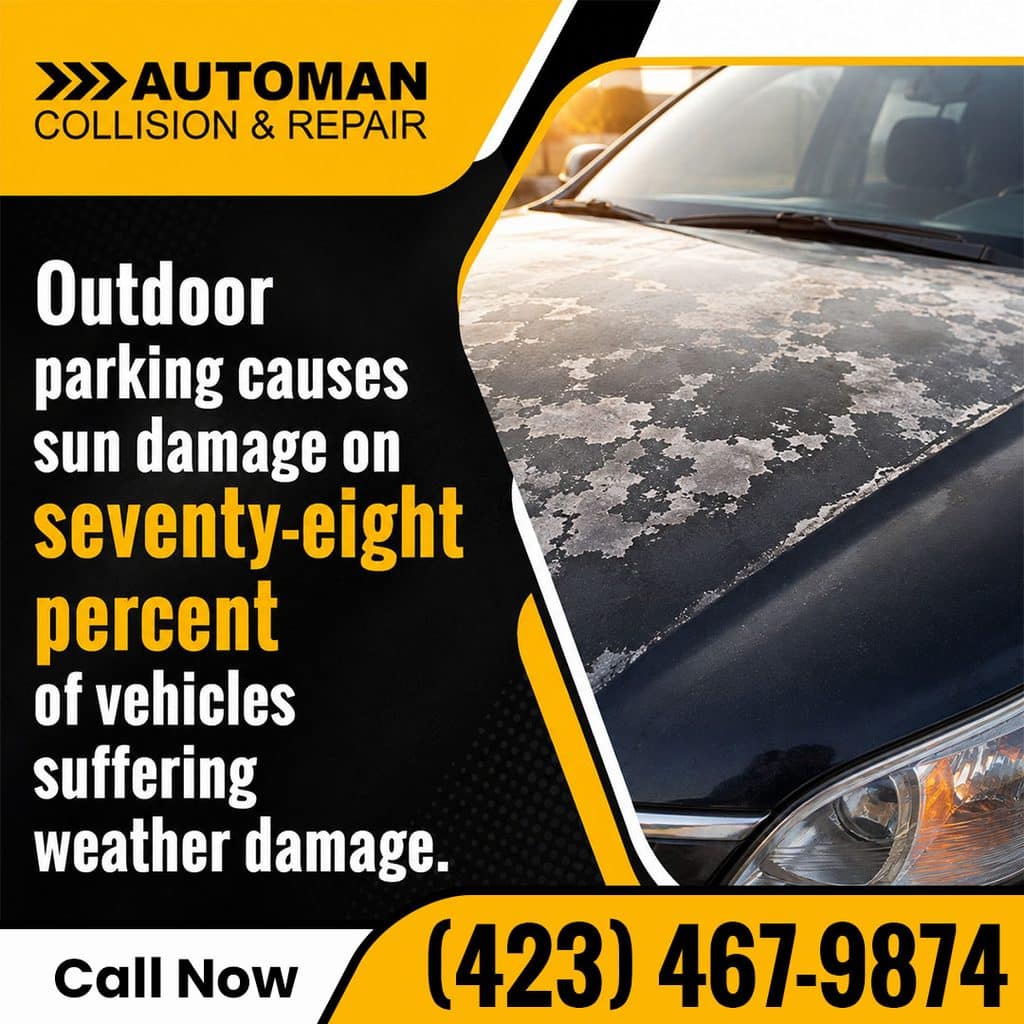
Heat damages car paint by speeding up two processes: UV photodegradation and oxidation. UV rays break the chemical bonds in paint pigments, fading color. Heat then accelerates the reaction between oxygen and the paint surface, leaving it dull.
Johnson City summers can reach highs near 85°F in July, with dashboard and hood surface temperatures climbing far higher under direct sun. Your car’s clear coat sits exposed to this heat for hours during daily parking and driving.
A national survey of vehicle owners found that 61% who park outdoors without protection have experienced weather-related vehicle damage, and faded paint was the most common issue reported at 78%.
Why Do Some Cars Fade Faster Than Others?
Darker paint colors fade faster because they absorb more light and heat. Black, navy, and deep red finishes pull in significantly more solar energy than white or silver paint, which reflects sunlight instead of absorbing it. If you drive a dark-colored vehicle in Tennessee, scheduling regular auto body repair inspections can catch fading and chalking before they spread.
| Factor | Effect on Paint | Faster Fading Risk |
| Dark Colors | Absorb more heat | High |
| Light Colors | Reflect more sunlight | Lower |
| Outdoor Parking | Prolonged UV exposure | High |
| Garage Parking | Reduced UV exposure | Lower |
| Unwashed Surfaces | Contaminants bake into clear coat | High |
Can Heat Cause Permanent Paint Damage?
Yes, heat can cause permanent paint damage once oxidation reaches the base coat. Early-stage chalking and dullness often respond to machine polishing. Advanced-stage cracking or peeling clear coat typically requires evaluation by auto body repair professionals to determine the right repair path.
Bird droppings, tree sap, and road grime become far more destructive in Tennessee heat. These contaminants contain acids that etch into a softened clear coat, leaving marks that washing alone cannot remove.
What Should You Do to Protect Your Car’s Paint?
Park in shade or a garage whenever possible, wash your vehicle regularly to remove contaminants before they bake on, and apply a UV-resistant wax or ceramic coating each season. Address chalking or dullness early with a professional inspection.
If your paint already shows fading, chalking, or clear coat damage, a qualified auto body repair shop can assess the surface and recommend correction before the damage spreads further.
Trust Your Vehicle to Automan Collision & Repair
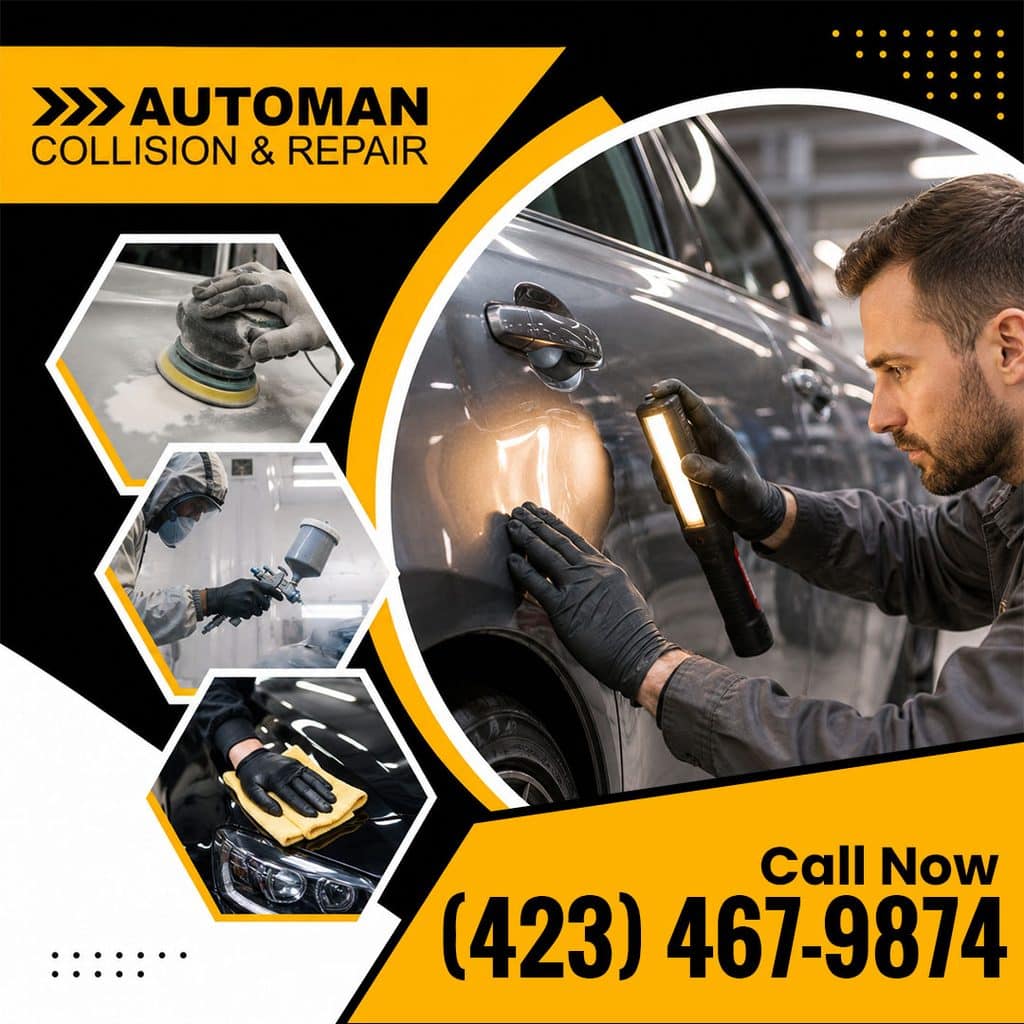
At Automan Collision & Repair, LLC, we have served Johnson City, TN, for more than 30 years. Our I-CAR Gold Class certification reflects the training standard we bring to every repair, including restoring heat-damaged and sun-faded paint to a like-new finish. We offer free, no-obligation estimates for drivers throughout Johnson City and nearby areas.
Call us at (423) 467-9874 or email [email protected] to schedule your paint assessment with the area’s trusted local auto body repair in Johnson City.