
A pothole impact sends a sharp, sudden force through your vehicle’s body and frame simultaneously. The severity depends on the depth of the pothole, your vehicle’s speed, and the angle of impact. What makes pothole damage particularly challenging is that the effects are not always immediate. Some damage shows up days or weeks later, and without an inspection at an auto body repair shop, the connection between the impact and the problem is easy to miss.
U.S. roads are getting rougher every year. According to the American Society of Civil Engineers, poor road conditions cost U.S. drivers roughly $1,000 or more per year in additional vehicle operating costs, including wear, tear, and fuel inefficiency. That figure adds up fast when pothole season hits East Tennessee.
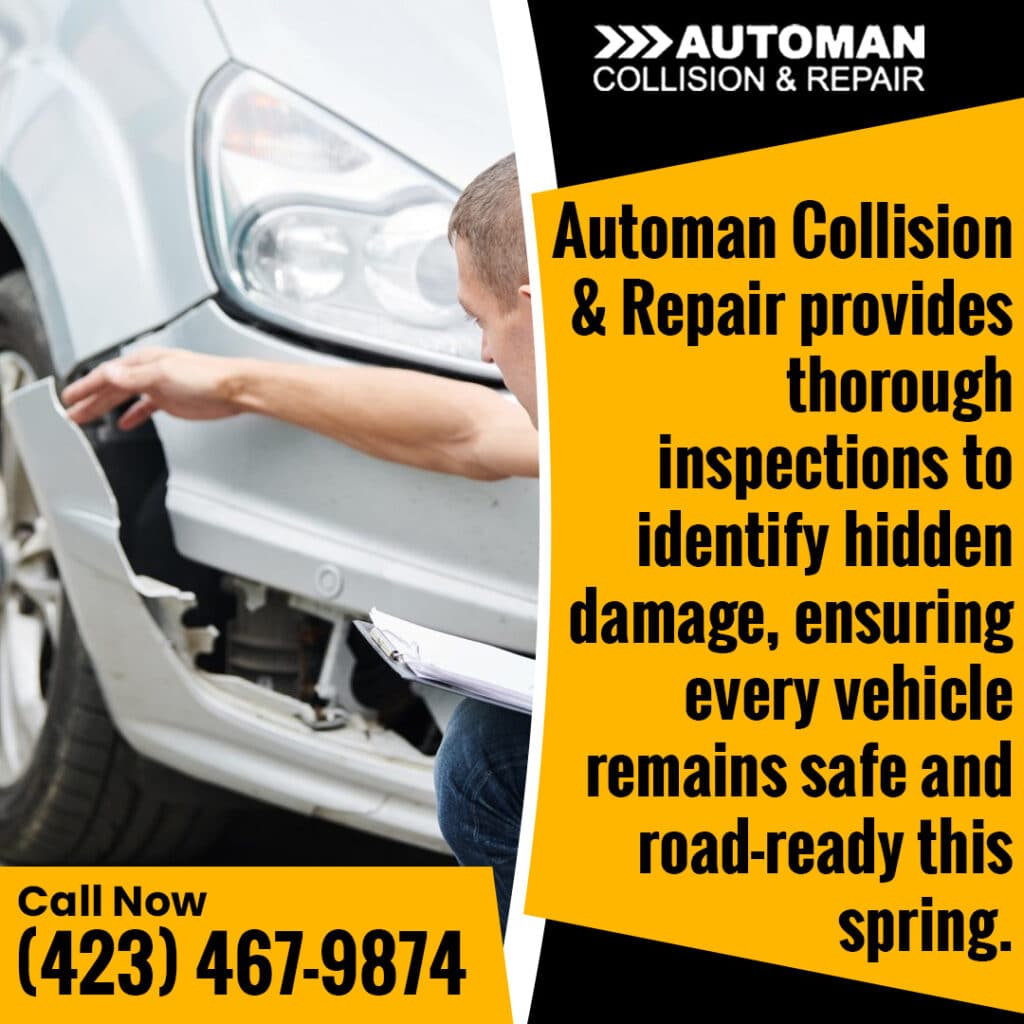
Johnson City roads are no exception. Freeze-thaw cycles during the winter months expand existing cracks in pavement, creating deeper, wider potholes by spring. Drivers who commute on local routes near downtown or along the highway corridors are exposed to this damage regularly. The problem tends to peak between February and April, when temperatures fluctuate most. Roads that seemed fine in January can develop significant potholes within weeks.
At Automan Collision & Repair, one of the most trusted local auto body shops in Johnson City, we want you to understand what happens structurally to your vehicle so you can act quickly and protect your investment.
Key Takeaways
- Pothole impacts can cause visible and hidden damage to your vehicle’s body panels and frame.
- Repeated pothole impacts cause cumulative damage that shortens the lifespan of the body and structural components.
- Damage isn’t always visible. Structural issues may go undetected without a professional inspection.
- Visiting a local auto body repair shop in Johnson City after a pothole is hit can prevent minor issues from becoming costly repairs.
- A single hard impact at the wrong angle can shift body panels, stress frame welds, and compromise the vehicle’s structural performance in a future collision.
Johnson City Weather and Potholes: Why East Tennessee Roads Take a Beating
Johnson City’s climate is a major contributor to pothole formation. Water seeps into existing cracks in the pavement. When temperatures drop below freezing, that water expands. When temperatures rise again, it contracts. Each cycle widens the crack a little further.
By February and March, those cracks have grown into full potholes. Johnson City’s elevation and its position in the Appalachian highlands make it more exposed to these temperature swings than lower-lying areas in Tennessee.
Spring in Johnson City means pothole season. Drivers on local roads and highway corridors feel it every year.
What a Pothole Does to Your Vehicle’s Body and Frame
Most modern vehicles use a unibody frame. Unibody (a construction method where the car’s body serves as the structural backbone, unlike older body-on-frame designs) vehicles distribute impact stress across the entire body structure.
A deep pothole hit at speed can cause misalignment, suspension stress, and in severe cases may contribute to structural stress in mounting points or weld areas. The damage may be invisible from the outside, but it can affect how the vehicle absorbs energy in a future collision.
This is particularly relevant from a safety standpoint. A vehicle’s structural integrity directly influences how crumple zones perform in a crash. If pothole impacts have weakened frame welds or shifted panel alignment, the car may not perform as designed in an accident. Crumple zones are engineered to collapse in a controlled pattern during a collision, absorbing energy before it reaches the occupant compartment. When a frame weld is stress-fractured from a pothole impact, that collapse pattern changes. The vehicle absorbs the crash differently than the manufacturer designed. An auto body inspection in Johnson City, TN, can identify these issues before they become a larger safety concern.
Undercarriage Damage You Can’t Always See
The undercarriage is also at risk from pothole impacts. A sharp pothole edge can crack skid plates and splash shields, leaving other components exposed to road debris.
If you hear a scraping or rattling sound from under your vehicle after a pothole, that’s a job for an auto body shop in Johnson City, TN, with the equipment to safely lift and inspect the undercarriage.
Splash shields and skid plates are designed to protect the underside of your vehicle from road debris, moisture, and impact. When a pothole cracks or dislodges one of these components, the parts they protect become exposed. Road debris at highway speeds can then cause additional damage that compounds the original repair cost. A detached splash shield can also drag along the road surface, creating a scraping sound that many drivers mistake for something more serious. Either way, a visual inspection under the vehicle confirms the source quickly.
Auto Body Repair: Pothole Damage by Vehicle Component
| Component | What Gets Damaged | Warning Signs | Urgency |
| Body panels | Panel gaps, misalignment | Visible gaps, paint stress cracks | High |
| Unibody frame | Welds, structural joints | Rattling, uneven panel fit | High |
| Undercarriage | Skid plates, splash shields | Scraping noise, loose panels | Moderate |
Pothole damage doesn’t follow a single pattern. Two vehicles hitting the same pothole at the same speed can sustain different damage depending on their weight, suspension design, and body construction. Heavier vehicles tend to absorb more force through the frame. Lighter vehicles may show more panel displacement. In both cases, a professional inspection at an auto body shop near you is the most reliable way to confirm what was affected and what wasn’t.
Does One Pothole Always Mean Visible Damage?
Not always. Damage falls into two categories.
Immediate damage shows up right away: a cracked plastic splash guard, a shifted body panel, or a visibly stressed seam. You know something went wrong.
Cumulative damage builds over time. The car still drives, but months later, a component fails earlier than expected. This is the harder damage to catch without a routine inspection.
Think of it like water damage inside a wall. Nothing looks wrong on the surface, but the structural issue is already developing. Getting your vehicle checked at a local auto body shop after hitting a severe pothole is always worth the time, even if the car seems fine. Drivers often underestimate this type of damage because the vehicle continues to operate normally. There’s no warning light, no immediate change in how the car drives, and no visible sign on the exterior. The damage only becomes apparent when a panel starts to separate, a weld gives way, or a follow-up collision reveals that the frame no longer absorbs impact the way it should.
When Should You Get Your Car Inspected After a Pothole?
Get your vehicle inspected if you notice any of the following:
- Visible gaps or misalignment between body panels
- Scraping, rattling, or clunking sounds from underneath
- A rougher ride than before the impact
- Cracks or damage to plastic panels, splash shields, or skid plates
- Dashboard warning lights related to stability or sensors
Even without these signs, a post-impact check at an auto body repair shop is the safest approach after a hard hit. Catching structural issues early protects both your safety and the long-term condition of your vehicle. The cost of an inspection is far lower than the cost of repairing damage that was left unaddressed. Many drivers in Johnson City wait until a problem becomes obvious before visiting an auto body shop. By that point, what started as a stress fracture in a weld or a cracked splash shield has often developed into a more involved repair. Acting quickly after a pothole impact gives you more options and keeps repair costs lower.
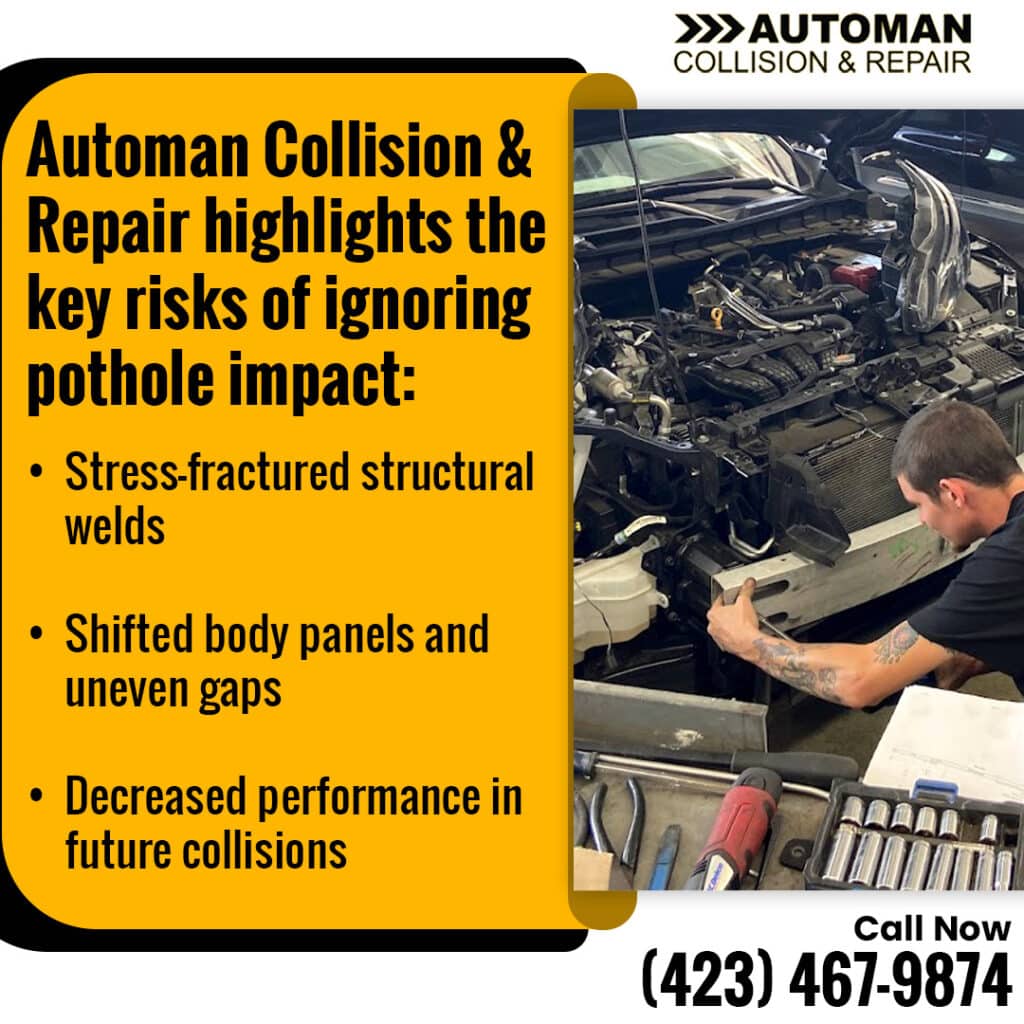
Get Your Vehicle Inspected at Automan Collision & Repair in Johnson City, TN
Did a pothole leave your vehicle with body damage or structural concerns? At Automan Collision & Repair, LLC, we have over 30 years of experience diagnosing and repairing pothole-related auto body and structural damage.
As an I-CAR Gold Class Certified auto body shop in Johnson City, TN, we meet the industry’s highest training standards. We handle all insurance paperwork, offer free no-obligation estimates, and won’t release your vehicle until the repair meets our standards.
We are a locally and family-owned business built on community trust, and we have earned the Reader’s Choice Award for our dedication to quality and customer satisfaction. Drivers throughout Johnson City and nearby areas in East Tennessee have relied on us for decades. Because we are not tied to any direct repair program with insurance companies, our focus stays entirely on restoring your vehicle correctly. We work for you, not the insurance provider. That independence means every repair decision is made with your vehicle’s safety and appearance as the priority.
Here’s what our clients have to say:
“I am very impressed. My car looks amazing. You can’t tell anything has changed. The whole front end was torn up and it looks amazing. They did such a great job.” – Samantha M.
“James is the absolute goat! My car was hit pretty bad and within a little less than a month had it looking better than it did before. Had a few things to touch up on and James didn’t hesitate to fix it. You and your team are amazing.” – Alvenga
Call Automan Collision & Repair LLC today at (423) 467-9874 or email [email protected] to schedule your inspection. Serving Johnson City and nearby areas across the Tri-Cities region of Tennessee.