
Professional windshield repair protects your safety and saves money. Damaged windshields weaken your vehicle’s structure and can fail during accidents. Professional technicians have the tools and training to restore your windshield’s strength properly.
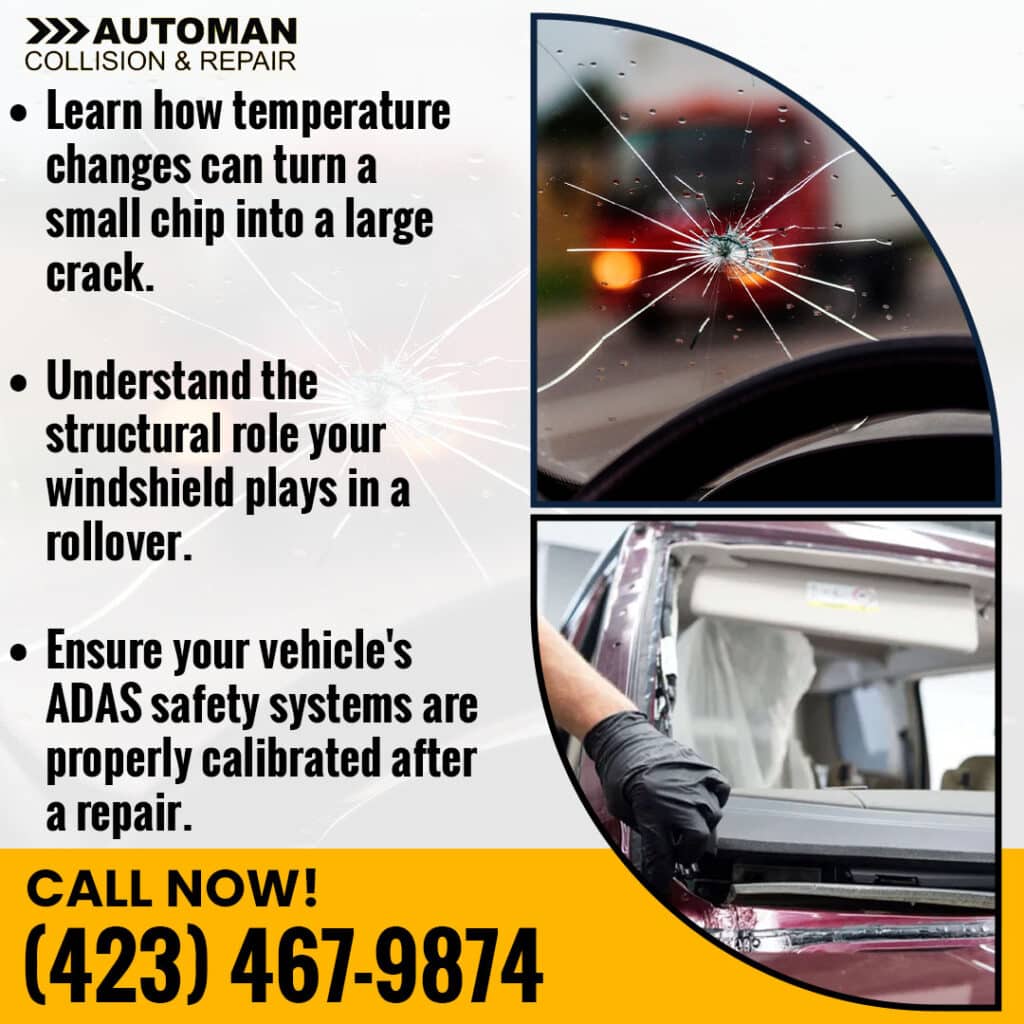
Your windshield does more than keep wind out of your face. It holds up your roof during rollovers. In a crash, it helps prevent occupant ejection and supports proper airbag deployment. Modern windshields also house cameras and sensors that power safety features like lane departure warnings and automatic braking.
When damage happens, you face a choice. Some drivers try DIY kits or ignore small chips. Others call a certified auto body shop that knows how to fix windshields correctly. The difference matters more than most people realize.
At Automan Collision & Repair LLC, our auto body repair shop in Johnson City, we see every day how professional windshield repair protects drivers by restoring structural strength, preserving vehicle safety systems, and helping prevent higher repair costs later.
Key Takeaways
- Small chips spread fast. Temperature changes and road vibrations cause minor damage to grow, which is why drivers often turn to a trusted auto body repair shop early.
- Professional repair outperforms DIY. A body shop near you uses pressure injection tools and commercial-grade resins that home kits cannot replicate.
- Windshield damage is common. Parking lot surveys across 12 states found 14% of windshields have long cracks, a frequent issue handled by local auto body shops.
- ADAS calibration matters. Modern vehicles require windshield calibration after any glass repair or replacement to keep safety systems working correctly.
- Edge cracks lead to replacements. Damage along the windshield edge causes 70% to 80% of replacement claims because that area is structurally weaker.
What Types of Windshield Damage Can Be Repaired?
Chips smaller than one inch and cracks under three inches can usually be repaired. The damage must be in the outer glass layer only. Location matters too. Damage in your direct sight line or at the windshield edge typically needs replacement.
Windshield damage comes in several forms. Each type has different repair options.
Chips appear as small circular breaks. A rock hits your windshield and removes a tiny piece of glass. These are also called stone breaks or pits. If the chip stays on the surface and measures less than an inch across, repair works well.
Star breaks look like their name. Lines radiate out from a central impact point. Think of a starburst pattern. These can be repaired if they’re small and haven’t spread.
Bullseye cracks create circular patterns that look like dartboards. They’re larger than chips and often can’t be fixed. Partial bullseyes are called half-moons.
Edge cracks start within two inches of your windshield’s edge. Research shows that 70% to 80% of windshield replacement claims involve edge cracks. These cracks spread quickly because the windshield edge is the weakest part. Manufacturing creates stress in this area during production.
Combination damage means multiple types of breaks in one spot. These complex situations usually require full replacement.
The size and location determine your options. Anything larger than a quarter probably needs replacement. Damage that goes through both glass layers always needs replacement.
How Do I Know If My Windshield Needs Repair or Replacement?
Measure the damage and check its location. Cracks longer than three inches need replacement. So does any damage in the driver’s view or at the windshield edges. Damage through both glass layers also requires a new windshield.
Here’s a simple decision guide:
Repair Criteria
You can likely repair if the damage:
- Measures less than one inch (chips) or three inches (cracks)
- Sits outside the driver’s direct view
- Stays in the outer glass layer only
- Isn’t at the windshield edge
- Involves only one or two separate damage spots
Replacement Criteria
You need a new windshield if:
- Cracks exceed three inches in length
- Damage penetrates both glass layers
- The break sits in your direct line of sight
- Edge cracks appear within two inches of the frame.
- You have three or more separate damage points
- The damage obstructs cameras or sensors
Professional technicians at an auto body shop in Johnson City, TN, can assess your specific situation. They’ll measure the damage, check the depth, and examine the location. The evaluation considers safety standards and repair limitations.
Many insurance policies, especially those with comprehensive glass coverage, may cover windshield repair with little or no deductible. Coverage for replacement varies by policy and insurer.
Why Is Professional Windshield Repair Important?
Professional repair restores your windshield’s structural strength properly. Certified technicians use medical-grade resins and specialized equipment. DIY kits can’t match this quality. Your windshield provides 45% of your vehicle’s structural integrity in front-end crashes and 60% in rollovers.
Your windshield isn’t just glass. It’s a laminated safety system with two glass layers bonded to a plastic film. This design keeps the glass together during impacts and prevents passenger ejection.
Proper repair requires specific steps. Technicians drill to prepare the damaged area. They inject clear resin under pressure to fill every crack and void. The resin must cure completely. Then they polish the surface smooth.
Temperature and humidity affect the repair process. Professionals control these factors. They also calibrate Advanced Driver Assistance Systems (ADAS) after repairs. Most 2018 and newer vehicles with ADAS will require windshield calibration after replacement to ensure systems like automatic braking and lane assist function correctly.
DIY repair kits seem convenient. They cost less upfront. But they often fail within months. The resin doesn’t bond properly. Air pockets remain. Water seeps in and causes the damage to spread.
Statistics from parking lot surveys in 13 cities across 12 states show that 14% of windshields have long cracks. Many of these started as small chips that weren’t repaired correctly or quickly enough.
Professional auto body repair in Johnson City, TN, includes warranties. If the repair fails, technicians fix it again at no charge. DIY kits offer no such protection.
What Causes Windshield Damage?
Road debris causes most windshield damage. Rocks, gravel, and other objects fly up from the vehicle’s tires. Temperature changes stress the glass. Accidents and weather events also create damage.
Understanding causes helps you protect your windshield:
- Flying Debris: Gravel trucks are notorious hazards. Construction zones scatter rocks across roads. Other vehicles kick up debris at highway speeds. Small stones hit with surprising force. They create instant chips or cracks.
Stay back from large trucks. Increase your following distance in construction areas. These simple steps reduce your risk.
- Temperature Extremes: Glass expands when hot and contracts when cold. Tennessee sees both extremes. Summer heat can reach over 90 degrees. Winter temperatures drop below freezing.
These changes stress your windshield. Existing chips or cracks spread faster during temperature swings. Never pour hot water on an icy windshield. The sudden temperature change can cause cracks.
- Poor Road Conditions: Potholes jar your entire vehicle. The impact stresses your windshield. Rough roads create constant vibrations. These vibrations can turn small chips into spreading cracks.
- Drive slowly over rough surfaces. Avoid potholes when possible. Your suspension and windshield both benefit.
- Accidents: Collisions create obvious damage. Even minor fender benders can crack windshields. The vehicle frame twists slightly during impact. This twisting transfers force to the glass.
- Improper Installation: Windshields must fit precisely. Gaps allow stress to build. Poor adhesive application weakens the bond. Professional installation prevents these issues.
- Manufacturing Defects: Glass edges contain residual stress from manufacturing. This makes them vulnerable. Quality issues are rare but possible.
Can a Small Chip Turn Into a Larger Crack?
Yes, small chips spread into large cracks quickly. Temperature changes cause glass to expand and contract. Vibrations from driving stress the damaged area. For every million vehicles on American roads, approximately 300,000 have some kind of chip.
A tiny chip seems harmless. You might plan to fix it later. But later often becomes too late.
Here’s what happens: The chip creates a weak point. Road vibrations flex the glass at this spot. The crack grows microscopically with each bump. You might not notice for days or weeks. Then suddenly, a crack shoots across your windshield.
Temperature changes accelerate spreading. Morning sun heats your windshield. The glass expands unevenly around the chip. This stress pushes the crack outward. Cold nights reverse the process but add more stress.
Water makes everything worse. It seeps into chips and freezes. Ice expands and widens the damage. Moisture also clouds the glass and makes repairs harder.
Time matters with windshield damage. Get chips repaired within days, not weeks. The repair stays simple and inexpensive. Wait too long, and you need a costly replacement.
Shops providing local auto body repair in Johnson City can often complete chip repairs in 30 minutes. Most insurance policies cover this with no deductible. There’s no reason to delay.
Does Windshield Damage Affect My Vehicle’s Safety Features?
Windshield damage can disable your vehicle’s safety systems. Modern cars mount cameras and sensors on the windshield. These control automatic emergency braking, lane keeping, and collision warnings. Even small cracks near these sensors can cause malfunctions.
Advanced Driver Assistance Systems (ADAS) rely on precise calibration. The cameras must align perfectly. Any distortion affects their accuracy.
Windshield damage near sensors creates several problems:
- Optical Distortion: Cracks bend light passing through the glass. Cameras can’t see clearly. They might misidentify objects or fail to detect hazards. Your car might brake unexpectedly or miss genuine dangers.
- Sensor Misalignment: Windshield replacement requires ADAS recalibration. Technicians use specialized equipment to reset the cameras. This process takes time and experience. Shops without proper tools can’t do it correctly.
- System Warnings: Many vehicles display warning lights when the ADAS stops working. Your owner’s manual might tell you to see a dealer. But certified auto body technicians in Johnson City have the same calibration equipment.
- Reduced Protection: Safety features protect you in emergencies. Malfunctioning systems leave you vulnerable. Automatic braking might not engage, and lane departure warnings might stay silent.
Structural integrity matters too. Your windshield supports the roof. In rollover accidents, it prevents the cabin from crushing. A properly repaired or replaced windshield maintains this strength. Poor repairs compromise it.
Professional technicians understand these connections. They repair windshields with safety as the priority. They recalibrate sensors when needed. They verify that all systems work correctly before returning your vehicle.
Will DIY Repair Kits Work as Well as Professional Repair?
DIY kits cannot match professional repairs. They lack the pressure injection systems that fill cracks completely. They use lower-quality resins. They can’t calibrate vehicle safety systems. Professional repairs come with warranties and meet safety standards.
Hardware stores sell windshield repair kits for low prices. They include resin and basic applicators. The instructions seem simple. But results rarely satisfy.
Here’s why DIY kits fall short:
- Inadequate Pressure: Professional tools inject resin under high pressure. This forces material into every microscopic crack. The bond becomes stronger. DIY kits rely on gravity and atmospheric pressure. They can’t fill the damage completely. Air pockets remain and weaken the repair.
- Inferior Materials: Professional-grade resins cure harder and clearer. They resist yellowing and maintain strength for years. Kit resins often cloud over time. They may not bond properly to the glass.
- Missing Equipment: Professionals use drills to prepare the damaged area. They create smooth surfaces for better adhesion. They have curing lights that set the resin quickly and thoroughly. DIY kits include none of this.
- No Calibration: If your vehicle has ADAS, you need professional service. Cameras require recalibration after windshield work. You can’t do this at home.
- Lack of Experience: Technicians know how to assess damage. They recognize when repairs won’t work. They understand glass properties and stress points. This knowledge prevents failed repairs that waste your time and money.
An auto body shop in Johnson City, TN, can evaluate your windshield damage for free. You’ll know exactly what you need. Professional windshield repair typically costs less than your insurance deductible. Many policies cover it completely.
Attempting DIY repairs risks making damage worse. You might introduce moisture. You could misalign the repair. The crack might spread while you work on it.
Windshield Repair vs. Replacement Decision Matrix
| Damage Type | Size/Location | Repair | Replacement |
| Chip | Under 1 inch, not in driver view | yes | |
| Chip | Over 1 inch or in driver view | yes | |
| Crack | Under 3 inches, away from the edges | yes | |
| Crack | Over 3 inches or at the edge | yes | |
| Star Break | Small, outer layer only | yes | |
| Bulls-Eye | Any size | yes | |
| Multiple Damage | 1-2 spots, repairable individually | yes | |
| Multiple Damage | 3+ spots | yes | |
| Edge Crack | Any size within 2 inches of the edge | yes | |
| Through Both Layers | Any size | yes | |
| Near ADAS Sensors | Small, not obstructing | yes | |
| Blocking ADAS Sensors | Any size | yes |
Why Choose Professional Auto Body Repair in Johnson City, TN
Your windshield protects you every time you drive. Proper repair requires experience, equipment, and quality materials. Certified technicians understand glass properties and safety requirements. They complete repairs that last and maintain your vehicle’s structural integrity.
Professional auto body repair in Johnson City offers several advantages. Technicians receive ongoing training through I-CAR and manufacturer programs. They stay current with vehicle technology and repair methods. Their work meets insurance company standards and comes with warranties.
Insurance coordination removes hassle from the process. Shops work directly with your insurance company. They handle claims paperwork and get approvals. Many policies cover windshield repair with zero deductible.
Time matters with windshield damage. The sooner you visit a body shop near you, the better the outcome. Small chips stay small when addressed early. Simple repairs reduce the risk of full windshield replacement. Your vehicle’s safety improves right away.
Get Professional Windshield Repair Today
Don’t let windshield damage compromise your safety. Automan Collision & Repair in Johnson City, TN, offers professional windshield repair backed by over 30 years of experience. Our I-CAR Gold-Class certified technicians use advanced equipment and quality materials to restore your windshield properly.
We work with all insurance providers and offer free estimates. Our team handles the paperwork so you can focus on getting back on the road safely.
Call Automan Collision & Repair at (423) 467-9874 or email [email protected] for professional windshield repair in Johnson City and nearby areas throughout Tennessee.