
A collision does more than dent metal. It can break, stretch, or weaken the welds that hold your vehicle’s safety structure together. As an auto body shop in Johnson City, TN, Automan Collision & Repair, LLC rebuilds those welds to manufacturer specifications, restoring the protection your vehicle had before the crash.
Key Takeaways:
- Collision damage can compromise welds you can’t see from the outside.
- We follow OEM weld specifications, not shortcuts, during every auto body repair in Johnson City, TN.
- Weld quality affects how well your vehicle protects you in a future collision.
- We use resistance spot welding and other manufacturer-approved methods.
- Every repair goes through inspection before your vehicle leaves our shop.
Why Does Collision Damage Affect More Than the Visible Dent?
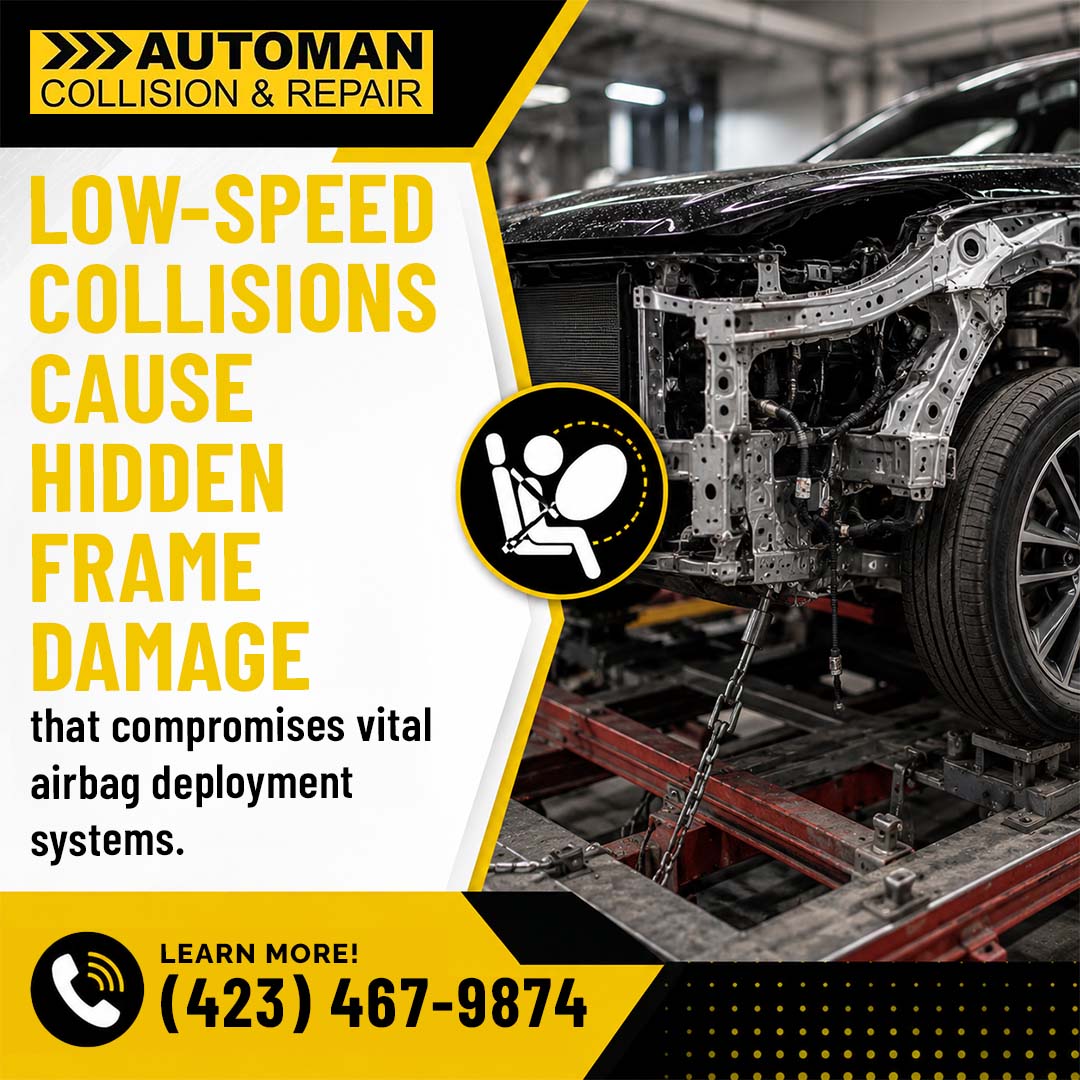
A crash transfers energy through your vehicle’s frame, not just the point of impact. That energy can crack, stretch, or fully break welds in the pillars, floor pan, or frame rails, even when the surrounding metal looks fine.
If those welds aren’t identified and repaired correctly, your vehicle’s crumple zones and safety cage may not perform the way they did before the crash. This is why a full structural inspection matters, not just cosmetic repair.
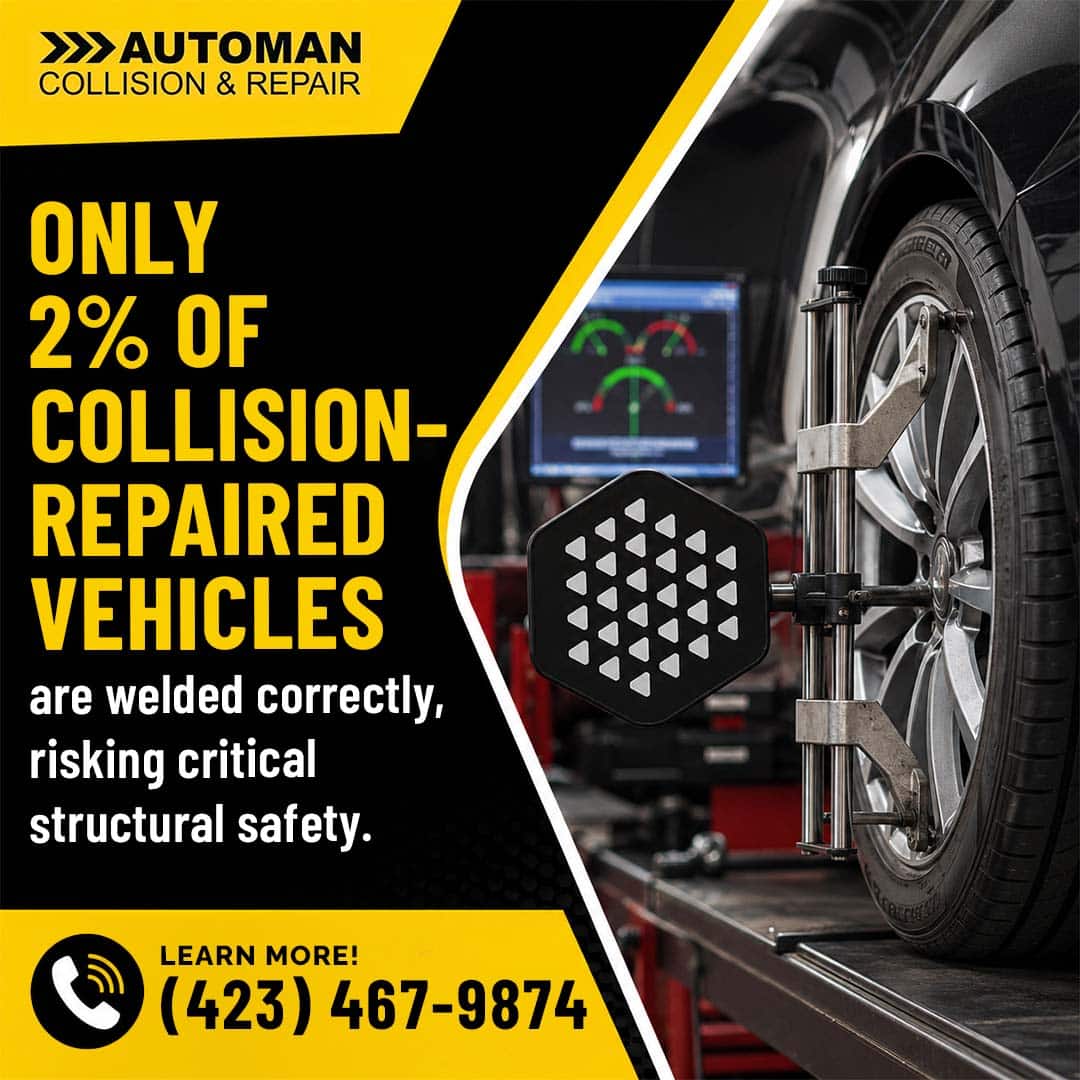
Weld quality across the collision repair industry varies widely. An estimated 2 percent of vehicles repaired at collision facilities are welded correctly, a gap linked to technician training shortfalls, limited auditing, and inconsistent shop conditions.
This is why choosing an auto body repair shop with verified certifications and documented weld procedures matters as much as the repair itself.
What Happens During a Weld Repair at Automan Collision & Repair?
We assess which welds were damaged, then rebuild them using the same weld type and placement that the manufacturer originally specified. This might mean resistance spot welding for standard panel sections or other approved methods for high-strength steel and specialized frame areas.
Our technicians follow OEM repair procedures rather than general shop practices because different manufacturers specify different weld requirements for the same part of the vehicle.
How Do We Verify Weld Quality After Repair?
Every weld repair goes through inspection before your vehicle is returned to you. We check weld placement, strength, and pattern against manufacturer standards, not just visual appearance.
| Repair Step | What We Check | Why It Matters |
| Damage Assessment | Which welds cracked, stretched, or failed | Identifies hidden structural damage |
| Weld Rebuild | Correct weld type and placement per OEM specs | Restores original crash protection |
| Quality Inspection | Weld strength and pattern | Confirms the repair meets manufacturer standards |
Why Does OEM Weld Repair Matter for EV and ADAS-Equipped Vehicles?
Electric vehicles and vehicles with ADAS (Advanced Driver Assistance Systems) require added care during weld repair. Battery frames need sealed, precise welds to protect high-voltage cells, and ADAS sensors often need recalibration after structural repair work.
We repair these vehicles to the same standard as traditional combustion vehicles, following manufacturer procedures for battery frame and sensor-adjacent repairs.
What Should You Ask a Shop Before Trusting Them With Weld Repair?
Ask whether the shop follows OEM weld specifications, uses manufacturer-approved equipment, and inspects welds after completion during your auto body repair. A shop that can’t answer these questions directly may not be restoring your vehicle’s original crash protection. These questions matter just as much for minor cosmetic fixes as they do for major auto body repair.
Trust Your Vehicle to a Certified Auto Body Shop in Johnson City, TN
We bring I-CAR Gold-Class certification and over 30 years of experience to every repair at Automan Collision & Repair LLC. Free, no-obligation estimates are available now.
Call (423) 467-9874 or email [email protected] to schedule your estimate.