
After a collision, two questions come up fast: What does the damage look like? And what does the damage actually affect?
Those are two very different questions. A scratch on your door is easy to spot. A bent frame rail is not. Both matter, but they matter in different ways.
This guide from Automan Collision & Repair LLC breaks down the difference between structural and cosmetic auto body damage. It explains what each type involves, how repairs differ, and why choosing the right auto body repair shop in Johnson City, TN, makes a real difference in your safety on the road. This blog by our team will help you make informed decisions after a collision, so you know exactly what your vehicle needs before repairs begin.
Key Takeaways
- Structural damage affects safety, not just appearance. A bent frame or damaged pillar can prevent crash protection systems from working correctly.
- Cosmetic damage should not be ignored. Unaddressed paint and dent damage leads to rust and lowers your vehicle’s resale value.
- Some repairs affect hidden safety systems. Even a bumper or windshield replacement can shift ADAS sensors and require recalibration.
- Not all body shops have the equipment for structural work. I-CAR Gold Class certification indicates a shop meets the industry’s highest repair training standards. Automan Collision & Repair LLC holds I-CAR Gold Class certification, one of the most recognized marks of quality at any auto body shop in Johnson City, TN.
- Structure is repaired before cosmetics. A proper repair sequence starts with the frame and works outward to the paint and finish.
What Is Cosmetic Damage?
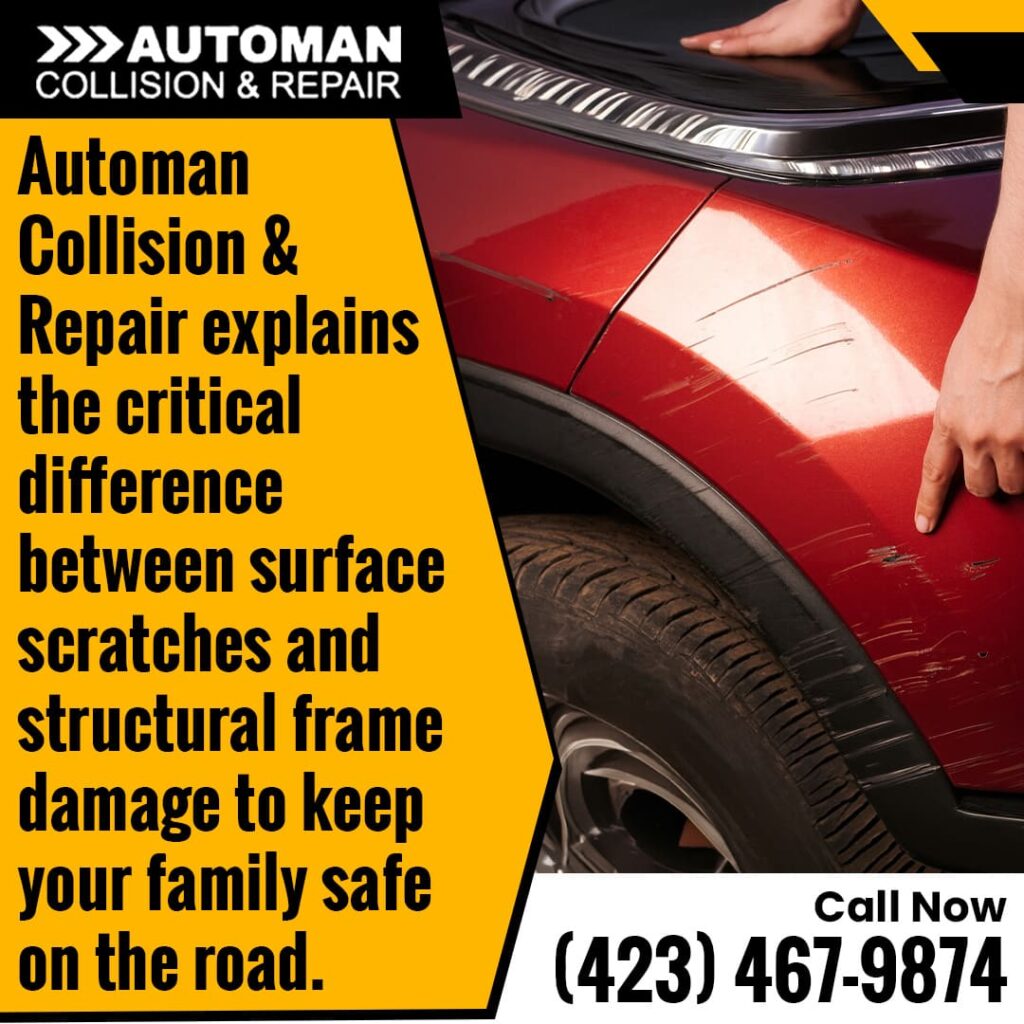
Cosmetic damage affects how your vehicle looks, but does not affect how it drives or protects you.
This is surface-level damage. It does not compromise the frame, suspension, or any safety system. Common examples include:
- Paint scratches and rock chips
- Small dents from parking lot contact
- Scuffs on bumper covers
- Minor dings on doors or fenders
These repairs restore the vehicle’s appearance. They also protect your car from rust and preserve its resale value. A small scratch left untreated can allow moisture to reach bare metal. Over time, the damage spreads.
Cosmetic repairs at a body shop near you typically involve body filler, paint matching, and panel refinishing to restore your vehicle’s appearance without affecting its structural integrity.
What Is Structural Damage?
Structural damage affects the parts of your vehicle that keep you safe in a crash.
Your vehicle is built around a frame or unibody structure. This framework absorbs crash energy and maintains the shape of the passenger compartment. When this structure is damaged, the vehicle cannot protect you the way it was designed to.
Structural damage commonly involves:
- The frame or unibody rails
- Pillars (the vertical supports around your windows and doors)
- Floor pans
- Firewall (the barrier between the engine bay and the cabin)
- Suspension mounting points
After a collision, this damage is not always visible. A car can look fine from the outside and have a bent subframe underneath. That is exactly why a professional inspection at an auto body shop in Johnson City, TN matters so much.
Key Differences at a Glance
| Feature | Cosmetic Damage | Structural Damage |
| Visible from outside? | Usually yes | Often no |
| Affects driving safety? | No | Yes |
| Typical repair methods | Paint, filler | Frame straightening, welding, and panel replacement |
| Repair time | Hours to 1-2 days | Days to weeks, depending on severity |
| Tools required | Standard body tools, paint booth | Computerized measuring systems, hydraulic equipment |
| Safety risk if ignored | Low (damage over time) | High (compromised crash protection) |
Why Structural Repairs Come First
Structural repairs take priority because your vehicle cannot protect you if its frame is out of specification.
Modern vehicles are designed to absorb and redirect crash energy in a specific way. When the frame is bent or the pillars are pushed out of position, that energy transfer fails. Airbags may not deploy correctly. Crumple zones may not work as intended. The roof may not hold its shape in a rollover.
According to industry data, the average collision repair cost exceeded $4,730 by the end of 2024, a 3.7% annual increase, with structural repairs driving those higher costs due to the specialized equipment and training required.
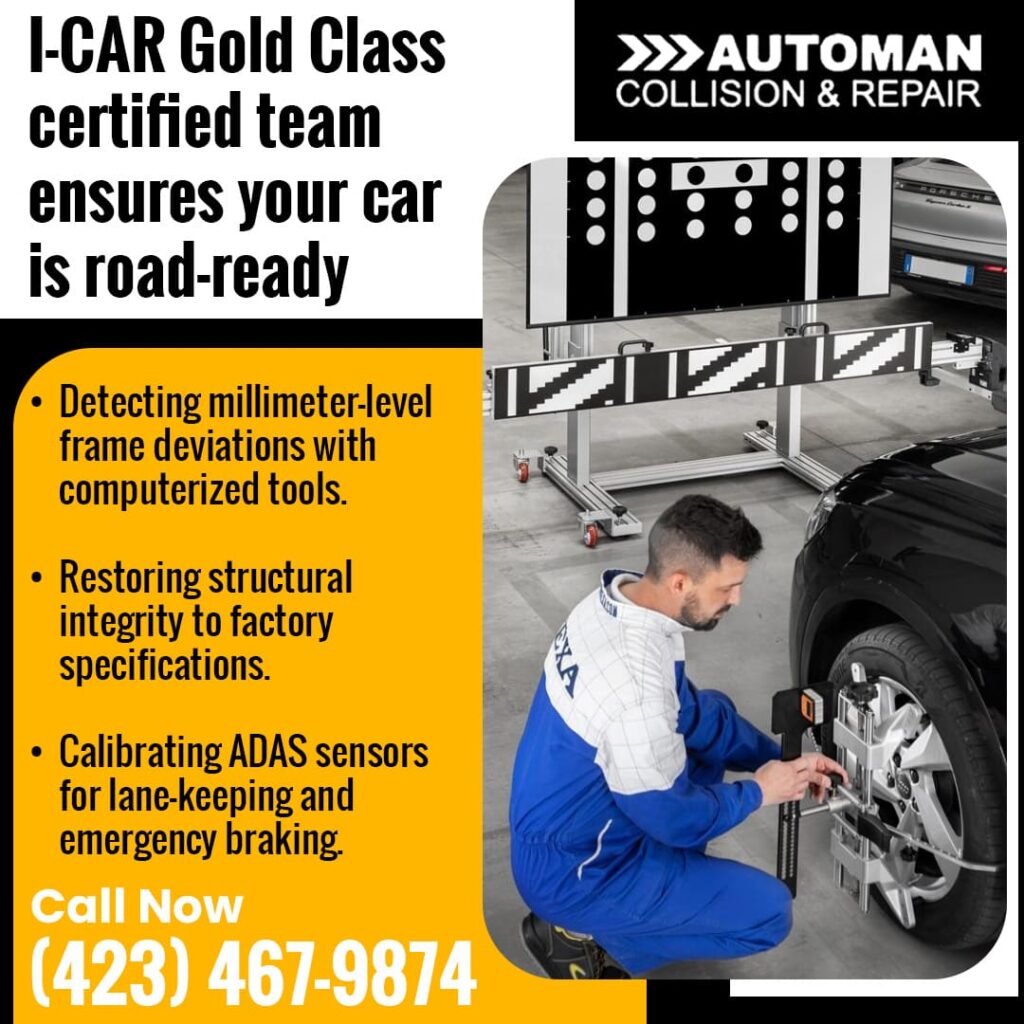
Structural repairs at a qualified auto body repair in Johnson City, TN, use computerized measuring systems to detect frame deviation down to the millimeter. Hydraulic equipment then applies precise force to return the frame to factory geometry. Welds are placed using manufacturer-specific procedures.
Skipping or shortcutting this work is not just a quality issue. It is a safety issue.
The Hidden Layer: ADAS and Sensor Calibration
Many modern vehicles have safety systems that require recalibration after any repair, cosmetic or structural.
ADAS, which stands for Advanced Driver Assistance Systems, refers to technology like automatic emergency braking, lane departure warning, and blind spot monitoring. These systems rely on cameras and sensors mounted throughout the vehicle.
Here is where things get more complex. Even a bumper replacement or windshield swap can shift a sensor out of alignment. Research testing found that improper ADAS calibrations caused complete lane departure system failure in some cases, while proper calibrations restored factory-level performance.
What seems like a purely cosmetic repair can affect safety system function if the repair involves a sensor mounting location. This is why working with an I-CAR Gold Class certified auto body repair shop in Johnson City, TN matters. Our technicians at Automan Collision & Repair are trained to this standard, and they understand both the structural and electronic layers of a proper repair.
How to Tell Which Type of Damage You Have
You can check for a few signs yourself before visiting local auto body shops:
Signs of cosmetic damage:
- Scratches, chips, or scuffs visible on the surface
- Small dents that do not affect door or panel alignment
- No change in how the vehicle drives or steers
Signs of structural damage:
- Doors or a hood that no longer close flush
- Panels that appear uneven or misaligned
- Vehicle pulls to one side while driving
- Steering feels different after the collision
- Visible bends or creases near the frame or wheel wells
If you notice any of the signs in the second list, stop driving the vehicle and have it inspected. A body shop near you can perform a full diagnostic using measuring equipment to identify hidden damage.
Does Cosmetic Damage Matter If the Car Is Safe to Drive?
Yes. Ignoring cosmetic damage leads to bigger problems over time.
Paint damage exposes bare metal to moisture. Rust forms and spreads. What starts as a $200 scratch repair can turn into a panel replacement that costs several times more if ignored for months.
Cosmetic damage also affects your vehicle’s resale value. Even if the car runs perfectly, visible damage lowers its market value. Buyers and trade-in appraisers factor in paint condition, dent count, and overall appearance.
An auto body shop in Johnson City, TN, can restore cosmetic damage properly, matching your paint color with precision equipment and blending panels for a seamless finish.
What the Repair Process Looks Like
Here is how a professional repair flows at a qualified auto body repair shop such as Automan Collision & Repair:
Step 1: Inspection A technician does a full visual and digital inspection. Computerized measuring tools check the frame for any deviation from factory specs.
Step 2: Damage Documentation All damage, visible and hidden, is documented. Your insurance provider receives this documentation for the estimate process.
Step 3: Structural Repair (if needed) Frame straightening, panel replacement, and structural welding happen before any cosmetic work begins. Structure comes first.
Step 4: Cosmetic Repair Body filler, surface prep, and paint matching follow. Paint is applied in a climate-controlled spray booth for an accurate color match.
Step 5: ADAS Recalibration (if applicable) Any sensor or camera affected by the repair is recalibrated to OEM specifications and tested before the vehicle leaves the shop.
Step 6: Final Quality Check The vehicle is inspected for panel alignment, paint quality, and system function before delivery.
Auto Body Repair in Johnson City, TN You Can Count On
When your vehicle needs repair, the work done underneath matters as much as what you see on the surface.
At Automan Collision & Repair, LLC, our team has over 30 years of experience handling both structural and cosmetic repairs. We are I-CAR Gold Class certified, which means our technicians meet the industry’s highest training standards for collision repair. We work with all insurance providers, handle the paperwork, and offer free estimates before any work begins.
Here is what sets us apart:
- Over 30 Years of Experience – Every repair benefits from decades of hands-on skill, delivering consistent precision you can count on.
- Award-Winning Service – We are a Reader’s Choice Award Winner, recognized by our community for quality repairs and customer care.
- I-CAR Gold Class Certified – Our technicians train to the highest standards in the collision repair industry, so your vehicle is in capable hands.
- Stress-Free Insurance Assistance – We coordinate directly with all insurance providers and manage the paperwork from start to finish.
- Advanced Equipment & Facility – Our shop uses modern tools and technology to bring your vehicle back to its original condition.
- Locally & Family-Owned – We are rooted in the Johnson City community and run our business with integrity and a personal touch.
- Free, No-Obligation Estimates – You get a clear, honest assessment of the repair costs before any work begins.
Whether you have a small scratch or need full frame restoration, we treat your car as if it were our own.
Call us today at (423) 467-9874 or email us at [email protected] to schedule your free estimate. We serve Johnson City and nearby areas throughout the Tri-Cities region of Tennessee.