
Cold temperatures render plastic bumpers brittle and prone to cracking. Your vehicle’s plastic parts lose flexibility when temperatures dip below freezing. What rebounds in summer weather shatters during winter months.
Modern vehicles feature plastic bumpers to reduce weight and boost fuel economy. These thermoplastics perform well under normal conditions. Cold weather alters their behavior. At Automan Collision & Repair LLC, we deliver professional collision repair in Tennessee and help drivers address cold-weather plastic damage before it worsens.
Key Takeaways
- Thermoplastic bumper material fractures at low temperatures rather than flexing, turning minor impacts into major cracks that require replacement.
- Modern lightweight bumpers trade cold-weather durability for fuel efficiency, making them more vulnerable than older metal designs.
- Snow bank impacts cause the most winter damage because packed snow becomes rock-hard and applies extreme force to brittle plastic.
- Hidden damage behind bumper covers is common as foam absorbers crush and sensors crack without visible exterior signs.
- Temperature-controlled facilities are considered best practice for plastic bumper repairs. Proper heating and acclimation significantly improve paint adhesion, plastic welding consistency, and overall repair quality.
How Temperature Affects Bumper Plastic
Thermoplastic olefin exhibits reduced impact resistance at very low temperatures. While it is engineered for durability, cold conditions can significantly increase the likelihood of cracking or fracture during even minor collisions. The plastic loses its ability to flex under stress. Minor impacts that cause small dents in summer create complete cracks during winter.
Your bumper contains long chain molecules that need to move and stretch. This movement absorbs impact energy. Temperature controls how easily these molecules slide past each other.
Scientists call this the glass transition temperature. Below this point, plastic changes from flexible to rigid. While most automotive bumper plastics do not reach their glass transition temperature at freezing, impact resistance decreases significantly as temperatures drop. Even above the formal glass transition point, reduced molecular mobility makes plastic bumpers more prone to cracking rather than flexing during impacts.
Polypropylene forms the base of most car bumpers today. This material represents a large percentage of all plastics used in vehicles. Manufacturers blend it with rubber compounds to improve flexibility. These blends still become brittle when cold.
Why Modern Bumpers Crack More Than Old Ones
Modern bumpers sacrifice durability for lighter weight and better fuel efficiency. Older vehicles used thick steel bumpers that could withstand temperature changes. Today’s bumpers use thin plastic covers over aluminum reinforcement bars.
Plastic bumpers are lighter than steel bumpers. This reduces vehicle weight by several pounds. Less weight means better gas mileage and lower emissions.
Automakers design bumpers to absorb low-speed impacts in parking lots. The bumper should protect expensive components behind it during minor collisions. These designs work well at normal temperatures.
Cold weather changes the equation. The thin plastic becomes fragile. A light tap against a snow bank can crack the entire bumper cover. The impact force that the material absorbs in summer exceeds what it can handle in winter.
Tennessee experiences temperature swings that stress plastic parts. Daytime temperatures may reach 50°F while nights drop below 20°F. This cycling between warm and cold weakens the plastic structure over time.
What Happens Inside Plastic During Winter
Plastic molecules slow their movement as the temperature drops. The material contracts and becomes denser. Individual molecular chains can no longer slide past obstacles smoothly.
Think of warm plastic like cooked spaghetti coated with oil. The strands move freely around each other. Cold plastic resembles uncooked pasta. The rigid strands snap under pressure instead of bending.
Your bumper contains multiple layers and materials. The outer shell uses flexible plastic. Inside sits foam or honeycomb structures that crush during impact. A reinforcement bar provides the main structural support.
Each layer responds differently to temperature. The plastic cover becomes brittle faster than the internal components. This creates stress at connection points. Cracks often start where different materials meet.
Paint adds another layer that reacts to cold. The paint film becomes harder as the temperature drops. It loses elasticity and can crack separately from the bumper. These paint cracks expose bare plastic to moisture and road salt.
Common Winter Damage Patterns
Collision repair shops see specific types of bumper damage during the winter months. Understanding these patterns helps you protect your vehicle and recognize problems early.
Snow bank impacts create winter bumper damage. Packed snow feels soft but becomes rock-hard when compressed by plows. Driving through these banks at normal speed applies tremendous force to your bumper.
The lower edge of front bumpers often contacts snow banks. This area cracks horizontally across the bumper width. The crack may extend several inches on each side of the impact point.
Parking lot collisions increase during winter. Icy conditions cause vehicles to slide into each other at low speeds. The brittle plastic shatters from impacts that would create only scratches in warm weather.
Door dings from adjacent vehicles cause more damage when the plastic is cold. A car door swinging open hits your bumper. The impact point cracks rather than dents. The crack radiates outward in a star pattern.
Road debris kicked up by other vehicles constantly strikes bumpers. Small rocks bounce off flexible summer bumpers. Those same rocks puncture cold winter bumpers. The holes allow moisture inside the bumper assembly.
Plastic Car Bumper Temperature Performance Guide
| Temperature Range | Material Behavior | Impact Resistance | Typical Damage |
| Above 32°F (0°C) | Normal flexibility | Good | Minor scuffs, scratches, small dents |
| 32°F to -4°F (0°C to -20°C) | Reduced flexibility | Decreased | Cracks, dents, surface damage |
| Below -4°F (-20°C) | Significantly brittle | Poor | Shattering, major cracks, breaks |
References: CNY Central – Syracuse, New York; Plastic Expert Group – US-based materials analysis; MIT School of Engineering – Massachusetts; Piedmont Plastics – US distributor, published January 2024
Key Notes:
- Most automotive bumpers are made from modified polypropylene (PP) or thermoplastic olefin (TPO)
- PP materials have inherently poor low-temperature performance, which is why manufacturers add impact modifiers and elastomers
- Cold weather significantly increases the risk of bumper damage from minor impacts
- Maximum recommended operating temperature for polypropylene is 180°F (82°C)
Hidden Damage From Cold Weather Impacts
Surface cracks often hide more serious structural damage underneath. Professional collision repair services in Tennessee inspect beyond what you see on the bumper cover.
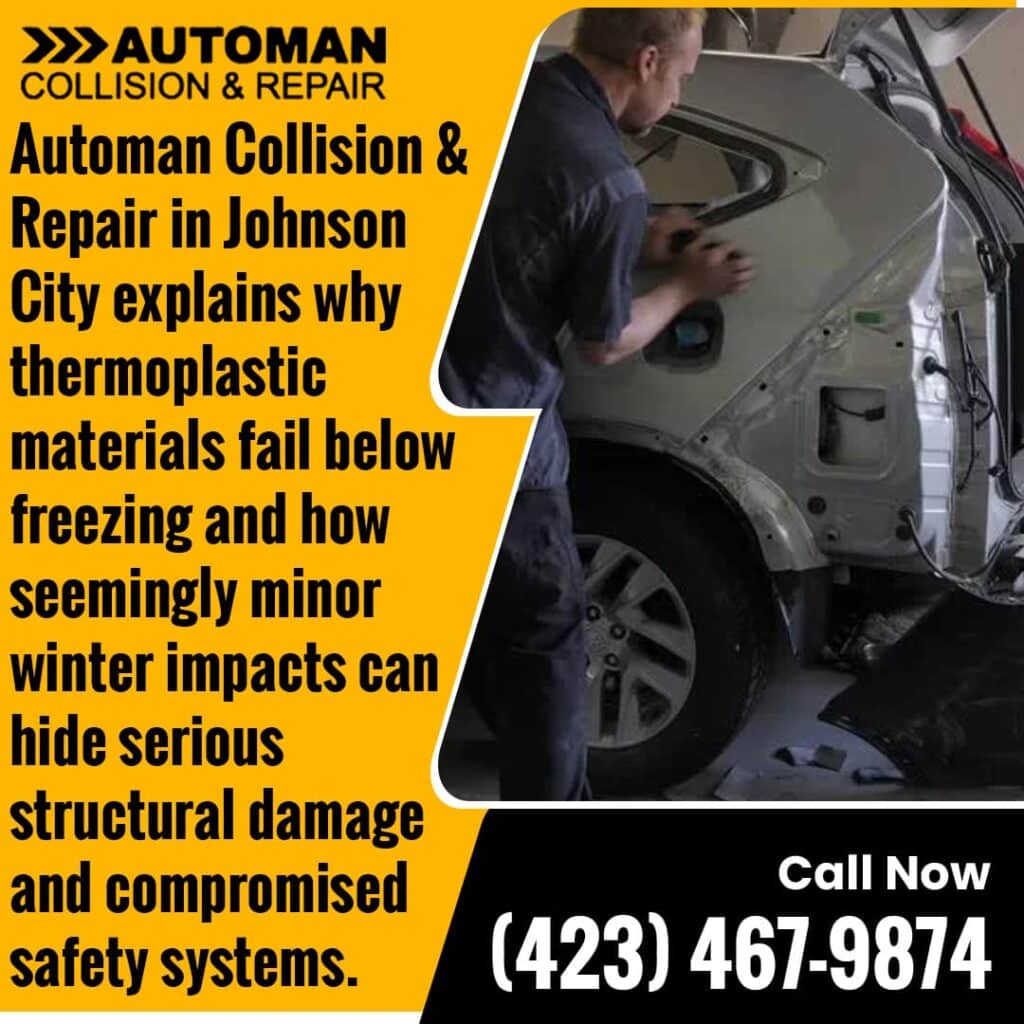
The foam energy absorber inside your bumper crushes during impact. This material cannot return to its original shape. Once compressed, it provides no protection in future collisions. The bumper looks fine from the outside, while the safety system is compromised.
Mounting brackets that attach the bumper to your vehicle can crack in cold weather. These plastic or metal tabs break without visible exterior damage. Your bumper becomes loose and may fall off while driving.
Sensor housings behind the bumper crack from cold-related impacts. Modern bumpers contain parking sensors, radar units, and cameras. These components sit in plastic housings that become brittle. A cracked housing allows water to damage expensive electronics.
The reinforcement bar behind the bumper can bend even when the plastic cover shows minimal damage. This metal or aluminum bar provides the real crash protection. A bent bar cannot absorb impact properly in another accident.
Why Repairs Get More Expensive in Winter
Cold-weather bumper damage typically requires complete replacement rather than repair. The brittle plastic develops cracks that spread through the material. Plastic welding may be ineffective on severely cold-damaged bumpers where cracking has propagated extensively or where material embrittlement compromises structural integrity. In such cases, replacement is often the manufacturer-recommended repair.
Repair shops heat plastic to perform welding. The surrounding cold material creates stress points. New cracks form adjacent to the repair within days or weeks. The only reliable solution involves replacing the entire bumper cover.
Paint adhesion problems increase during winter repairs. Body shops must control temperature carefully when painting plastic parts. Cold plastic surfaces are prone to condensation when moved into warmer environments. This surface moisture interferes with paint adhesion unless the substrate is properly acclimated and dried in a temperature-controlled facility.
Parts availability becomes an issue during the peak winter damage season. Many drivers need new bumpers simultaneously. Suppliers may be out of stock for popular vehicle models. Wait times extend to several weeks.
Insurance deductibles make some repairs uneconomical. A bumper replacement might cost slightly more than your deductible. You pay out of pocket rather than filing a claim to avoid rate increases.
Prevention Strategies for Winter Protection
You can protect your bumper from cold-weather damage through careful driving and parking choices. Simple precautions reduce your risk of expensive repairs.
Slow down when approaching snow banks or ice ridges. These obstacles are harder than they appear. Give yourself extra stopping distance. Avoid driving through deep snow at normal speeds.
Park away from high-traffic areas when possible. Other vehicles sliding on ice cause parking lot collisions. Extra walking distance reduces your exposure to door dings and sliding cars.
Clear snow away from your parking space rather than plowing through it. Spend a few minutes with a shovel. This prevents front bumper damage from hitting compressed snow repeatedly.
Warm your vehicle gradually on extremely cold mornings. Sudden temperature changes stress plastic parts. Let the engine idle for a few minutes before driving. This allows components to warm slowly.
Apply paint sealant before winter arrives. This protective layer keeps moisture away from plastic and paint. The coating adds flexibility that helps resist cracking. Professional detailing shops offer this service.
How Professional Shops Handle Cold Weather Damage
A collision repair shop needs specific equipment and procedures for winter bumper work. Not all facilities can properly repair cold-damaged plastic parts. Choose Automan Collision & Repair LLC for reliable winter bumper repairs and service. Contact us today to protect your car before damage worsens.
Computerized color matching systems account for how plastic appears at different temperatures. The same bumper looks slightly different in warm versus cold conditions. Shops match paint to room temperature conditions.
Quality repair facilities store replacement parts indoors before installation. Cold plastic taken directly from outdoor storage cracks easily during fitting. Parts need several hours at room temperature before technicians work with them.
Proper heating equipment allows plastic welding when repair is possible. Nitrogen plastic welders heat the material to specific temperatures based on the plastic type. Technicians at our collision repair shop in Johnson City, TN, identify the exact material before welding.
Modern diagnostic equipment tests sensors and safety systems after bumper replacement. Radar sensors need recalibration with manufacturer-specific procedures. Forward collision warning and automatic braking depend on properly aligned sensors.
When to Seek Professional Collision Repair
Do not delay repair of winter bumper damage. Small cracks spread quickly when exposed to temperature cycling and road salt. What starts as a 3-inch crack becomes a 12-inch split within weeks.
Look for these signs that indicate you need a professional evaluation:
- Visible cracks longer than 1 inch
- Bumper sitting loose or misaligned
- Gaps between the bumper and the vehicle body
- Sensor warning lights on the dashboard
- The bumper feels soft or flexible when pushed
- Paint peeling around damaged areas
Auto body collision shops near you can assess damage quickly. Facilities may offer free inspections and estimates. This allows you to understand repair options before committing to the work.
Some insurance policies cover winter weather damage under collision coverage. Contact your insurance company before assuming you must pay out of pocket. Document damage with photos immediately after it occurs.
Material Science Behind Bumper Failure
Polypropylene and thermoplastic olefin contain specific molecular structures that determine cold-weather performance. Understanding this science explains why newer bumpers fail differently than older designs.
Automotive plastics contain polymer chains thousands of molecules long. These chains tangle together like threads in a ball of yarn. At warm temperatures, the chains slide past each other while staying connected.
Manufacturers add rubber compounds to improve impact resistance. Ethylene-propylene rubber blends with polypropylene base material. The rubber creates flexible zones within the rigid plastic matrix.
Temperature affects how rubber and plastic interact. Above freezing, the rubber particles absorb impact energy through deformation. Below freezing, rubber becomes rigid and cannot deform. The entire bumper behaves like solid plastic.
Mineral fillers like talc and calcium carbonate increase bumper stiffness. These hard particles raise the elastic modulus. The bumper becomes more resistant to sagging but also more brittle. Cold amplifies this brittleness.
Manufacturers balance flexibility versus rigidity for average conditions. Most bumpers perform well between 40-100°F. Extreme cold pushes materials beyond their design parameters.
The Cost of Winter Bumper Problems
Winter bumper damage affects your vehicle value and safety beyond immediate repair needs. Understanding these broader impacts helps you prioritize repairs appropriately.
Damaged bumpers reduce your vehicle’s resale value. Buyers notice visible cracks and missing pieces. Even repaired bumpers show up in vehicle history reports. This documentation follows your car permanently.
Safety systems stop working when bumper damage disrupts sensors. Automatic emergency braking may not activate. Parking assist systems give false warnings. These failures put you at risk during future driving.
Small cracks allow road salt and moisture into bumper assemblies. Damage develops on metal reinforcement bars and mounting brackets. This hidden deterioration costs more to repair than the original bumper crack.
Paint damage from bumper cracks spreads to adjacent body panels. Water seeps behind loose bumper edges. The vehicle’s quarter panels or fenders develop more problems. These repairs exceed the original bumper replacement by thousands of dollars.
Trust Professional Collision Repair in Johnson City
Your vehicle deserves proper care after cold-weather bumper damage. Professional collision repair services in Tennessee understand how temperature affects modern plastic components. Our team has the equipment and training to handle winter damage correctly.
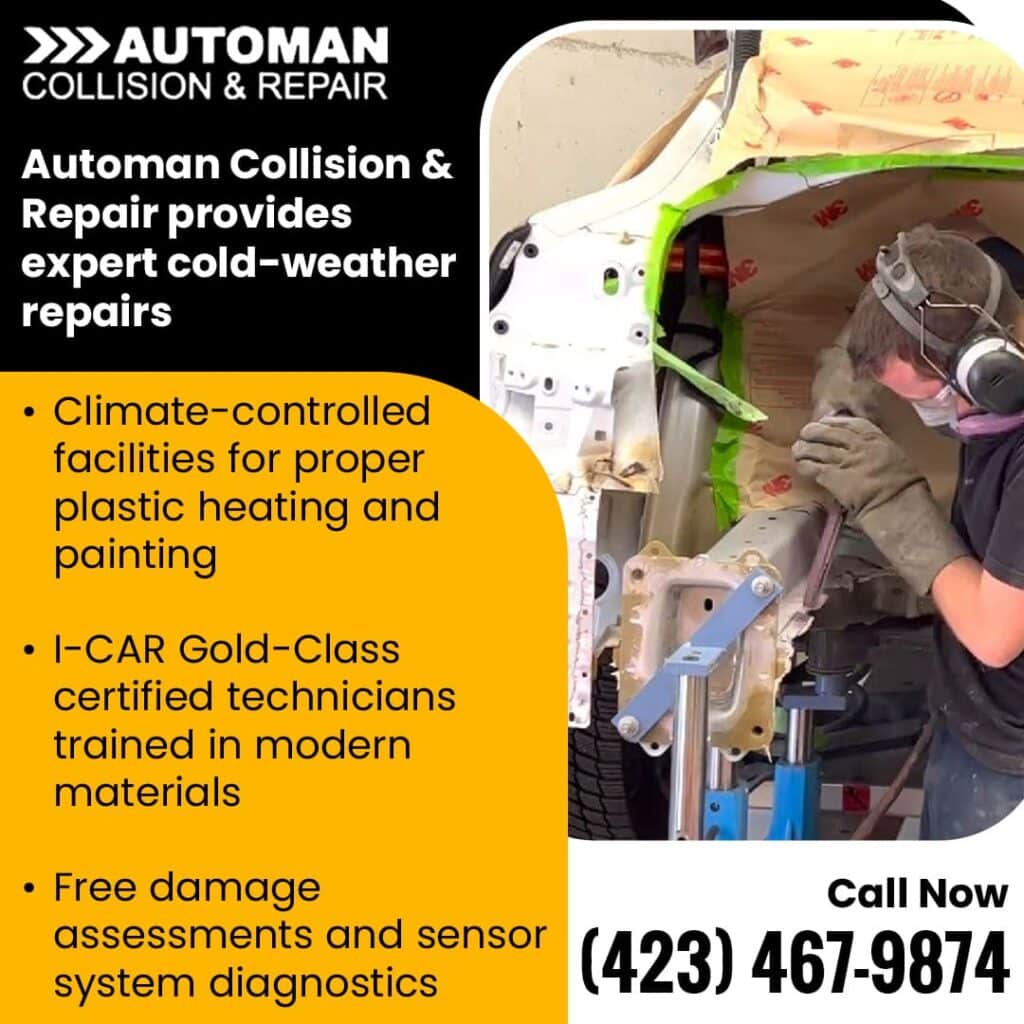
Automan Collision & Repair operates from a modern, climate-controlled facility. We heat parts before installation and paint in temperature-regulated booths. Our I-CAR Gold-Class certification means our technicians stay current with manufacturer repair procedures.
We inspect damage thoroughly to find hidden problems. Computerized diagnostic equipment tests all sensor systems. Our color-matching technology accounts for how plastic appears at different temperatures. The repair looks perfect and functions safely.
Contact Automan Collision & Repair LLC at (423) 467-9874 or email [email protected] for winter bumper damage assessment. We provide free estimates and work with all insurance companies. Our facility at 114 Industrial Rd. in Johnson City serves the local area with over 30 years of experience.
Schedule your inspection today. Winter damage spreads quickly when temperatures cycle above and below freezing. The collision repair shop you trust can prevent small cracks from becoming major structural problems. Repair collision damage promptly to maintain your vehicle’s safety and value.