
Modern vehicles rely on sensors, cameras, and control modules for airbags, ADAS, and electrical systems. OEM electrical components match your car’s exact wiring, calibration, and connector specifications. At Automan Collision & Repair, our auto body repair shop in Johnson City, TN, we use OEM electrical parts to keep these systems working the way your manufacturer designed them.
Key Takeaways
- Sensor accuracy: OEM sensors are built to your vehicle’s exact calibration specs.
- Wiring compatibility: OEM connectors match factory voltage and signal requirements.
- ADAS reliability: Camera and radar systems depend on correct component placement.
- Safety systems: Airbag and seatbelt sensors need precise electrical response times.
Why Do Modern Vehicles Depend on Electrical Sensors?
Vehicles built in the last decade use electrical sensors for far more than dashboard warning lights. Cameras, radar units, and control modules manage braking, steering assistance, and collision avoidance. According to the Auto Care Association, at least one ADAS feature is available on 92% of new vehicles sold in the U.S., citing data reported by the Insurance Institute for Highway Safety. That means most vehicles coming through our auto body shop in Johnson City now include some form of sensor-based safety system.
Why Does OEM Matter for Electrical Components?
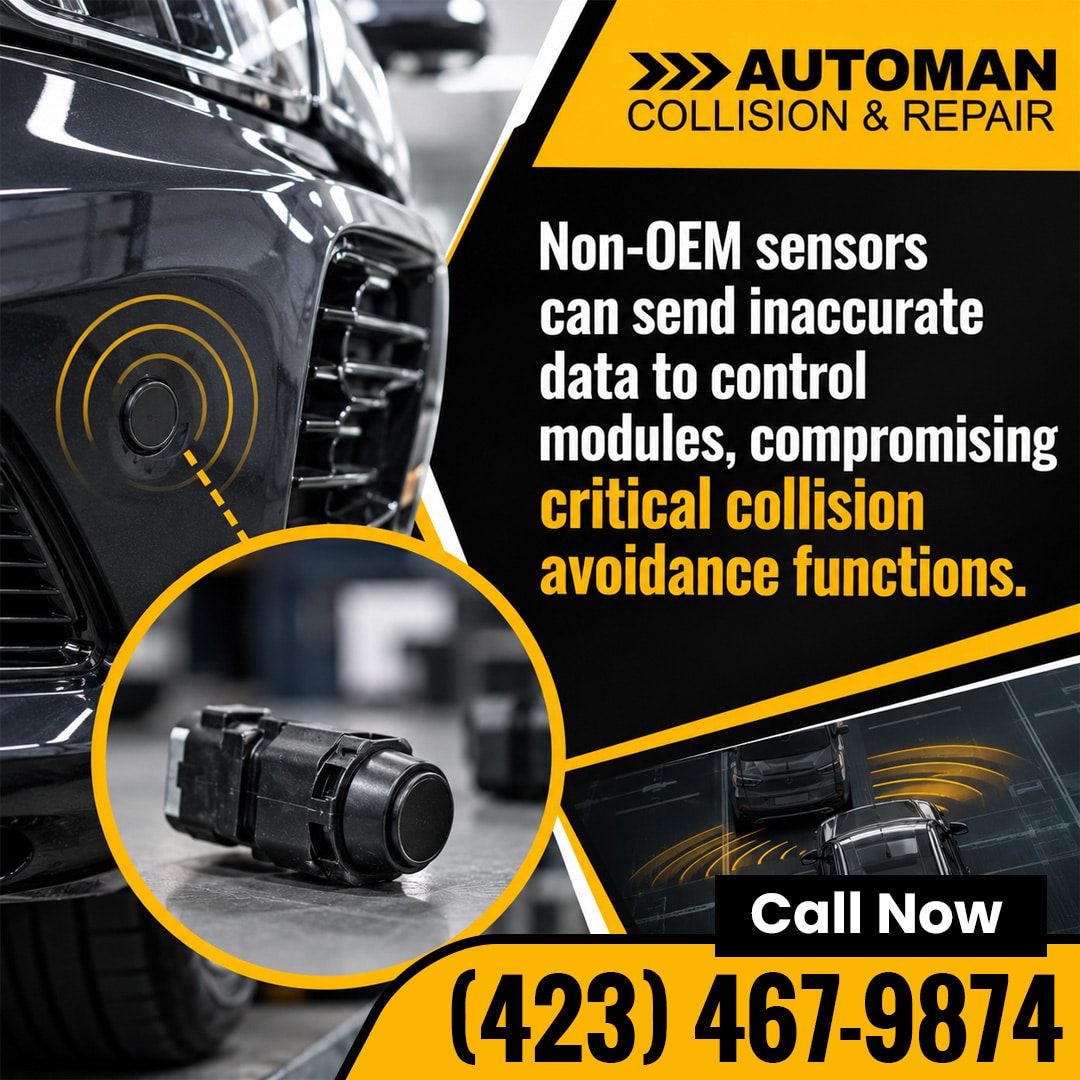
OEM electrical parts are built to match your vehicle’s exact wiring harnesses, connector pins, and voltage output. A mismatched connector or generic sensor may fit physically but send incorrect signals to your car’s control module. That small difference can affect airbag deployment timing or ADAS camera readings.
| Component | OEM Part | Non-OEM Part |
| Radar sensors | Matches factory calibration | May need extra adjustment |
| Wiring harnesses | Exact connector fit | Possible signal mismatch |
| Control modules | Programmed to vehicle specs | Compatibility not guaranteed |
| Airbag sensors | Manufacturer-tested response time | Response time may vary |
| Camera brackets | Precise mounting position | Alignment risk |
What Happens If Electrical Parts Are Not OEM?
A non-OEM sensor might trigger a warning light, fail calibration, or send inaccurate data to your vehicle’s computer. In vehicles with forward collision warning or lane departure alerts, this can mean the system reacts late or not at all. Any auto body repair shop working on ADAS-equipped vehicles should verify electrical component compatibility before completing a repair.
How This Affects Insurance Estimates
Insurance estimates sometimes list generic electrical parts to lower repair costs. Ask your insurer whether OEM sensors and modules are included for safety-related systems, especially on newer vehicles still under warranty.
How We Handle Electrical Repairs at Automan Collision & Repair
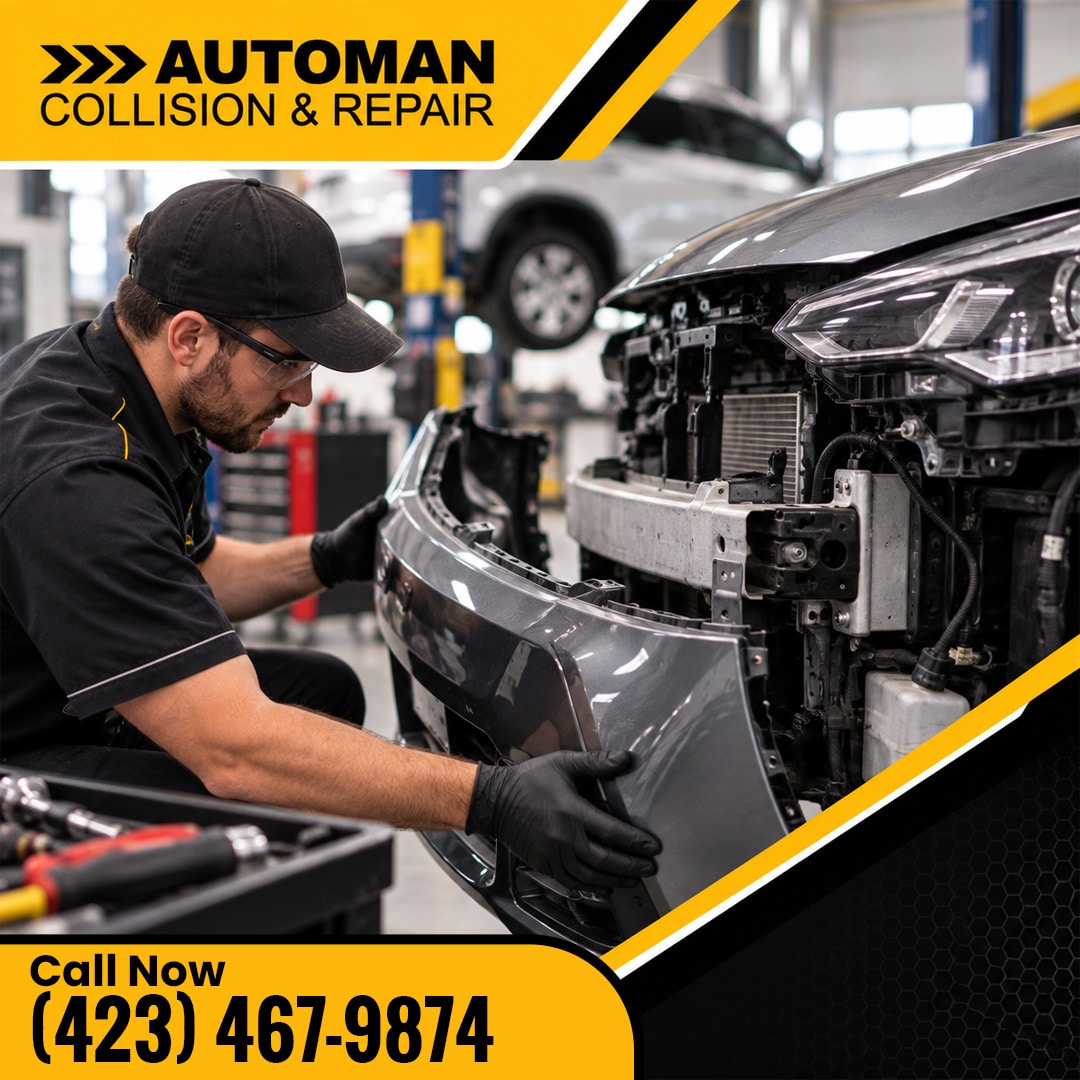
We are I-CAR Gold Class certified, and our technicians follow manufacturer procedures for calibrating sensors and testing electrical systems after a repair. When a vehicle needs radar recalibration, camera alignment, or airbag sensor replacement, we use OEM components to restore accurate performance.
Drivers throughout Johnson City and nearby areas bring us vehicles with advanced electrical systems because we test every sensor and control module before
returning the car.
Schedule Your Electrical System Inspection
If your vehicle needs sensor calibration or electrical repair after a collision, the team at Automan Collision & Repair LLC can confirm which parts your car requires. Call us at (423) 467-9874, email [email protected], or visit our shop in Johnson City, TN, for a no-obligation estimate.