
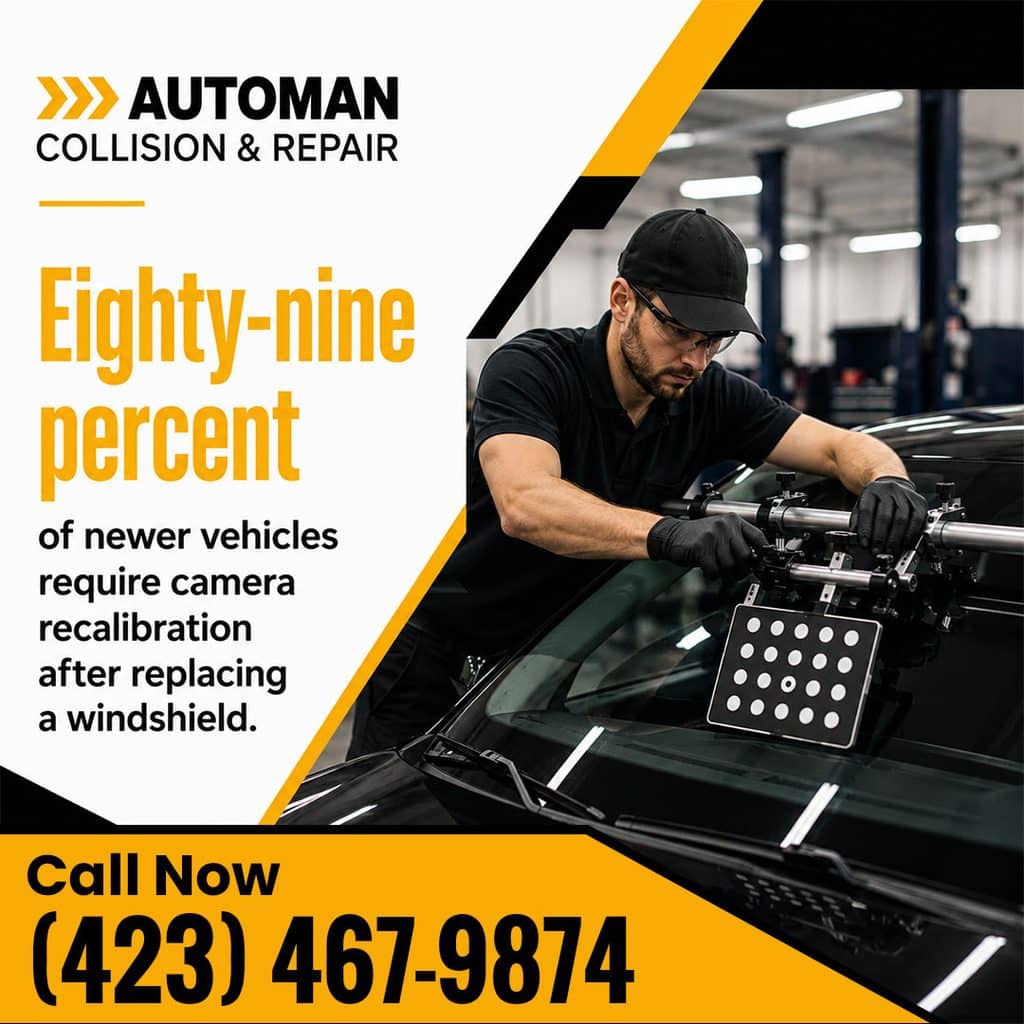
Not every windshield replacement requires ADAS recalibration, but most modern vehicles do. About 89 percent of model-year 2023 and newer vehicles require calibration after windshield replacement, up from just 25 percent of model-year 2016 vehicles. Automan Collision & Repair, LLC checks every vehicle’s calibration requirements before completing a windshield replacement, following standard collision repair practice.
Key Takeaways:
- Camera Location Matters: Vehicles with a forward-facing camera mounted near the windshield typically need recalibration after replacement.
- Newer Vehicles, Higher Odds: 89 percent of 2023-plus model-year vehicles require calibration versus 25 percent of 2016 models.
- Static vs. Dynamic: Some vehicles need in-shop calibration, others require a road test, and some need both.
- Skipping It Carries Risk: An uncalibrated camera can misjudge distance or fail to trigger safety features correctly.
- Collision Repair Services: A shop that checks calibration requirements protects both safety and manufacturer compliance.
Why Does Windshield Replacement Affect ADAS?
Windshield replacement affects ADAS because many vehicles mount a forward-facing camera directly behind the glass. That camera reads lane markings, other vehicles, and pedestrians to support features like lane departure warning and automatic emergency braking. Removing and reinstalling the windshield shifts the camera’s exact position, even by a fraction of a degree, which is enough to affect accuracy.
How Common Is This Requirement?
This requirement has become common as ADAS-equipped vehicles have taken over the market. Industry data shows 11 of the top 15 automakers built more than 95 percent of their 2022 model year vehicles with forward-facing cameras requiring calibration after windshield replacement. That figure climbs further for newer vehicles, with 89% of model-year 2023-plus vehicles requiring calibration compared with only 25% of 2016 models.
| Vehicle Model Year | Windshield Calibration Required |
| 2016 | 25% |
| 2022 (top 15 automakers) | 95%+ |
| 2023 and newer | 89% |
What Types of Calibration Exist?
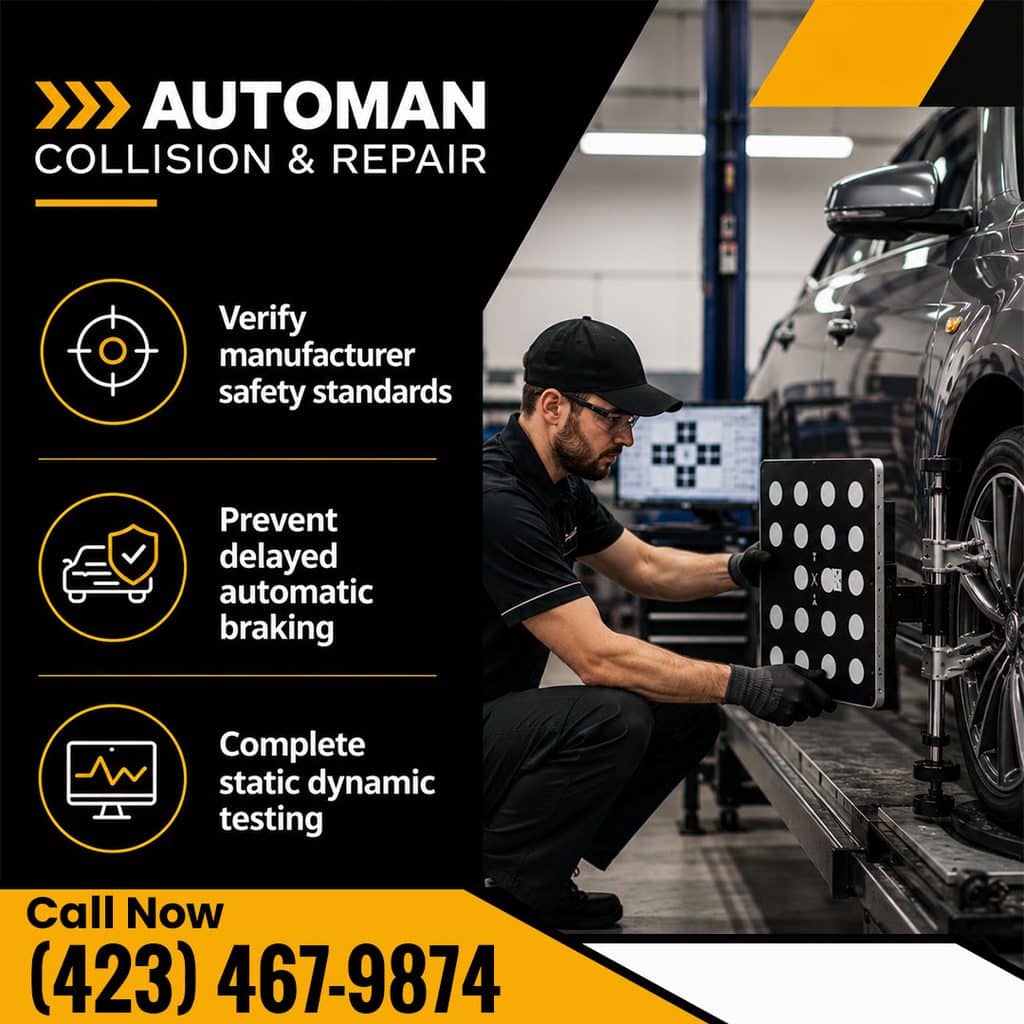
Two calibration types exist as part of professional collision repair services: static and dynamic. Static calibration happens in the shop using targets placed at exact distances from the vehicle. Dynamic calibration requires driving the vehicle under specific conditions so the system can recalibrate while in motion. Some manufacturers require both methods for a single vehicle.
Can You Skip Recalibration After a Windshield Swap?
You should not skip recalibration if your vehicle’s camera system requires it. Driving with an uncalibrated camera means the system may misread distance, delay braking response, or fail to activate as intended. The manufacturer sets the calibration requirement, not the repair shop, so skipping this step goes against the vehicle’s designed safety standards.
Why This Matters for Professional Collision Repair in Tennessee
Professional collision repair in Tennessee should always include a check for calibration requirements whenever glass work is part of the repair plan. A shop equipped with the right tools and training verifies whether static, dynamic, or dual calibration applies before returning the vehicle to the road.
Trust Automan Collision & Repair for Complete Windshield and ADAS Work
At Automan Collision & Repair, LLC, we’ve served Johnson City, TN, for more than 30 years. We are I-CAR Gold Class certified, a standard that includes ADAS training for our team. We check every windshield replacement against manufacturer requirements before completing the repair.
Call us at (423) 467-9874 or email us at [email protected] for a free, no-obligation estimate on windshield replacement and calibration.