
You just picked up your car from a collision repair shop. The paint looks perfect. The next thing most people want to do is keep it that way.
But washing or waxing too soon can damage a fresh paint job. The timing matters. The products you use matter. And the steps you take in the first 90 days after collision repair services can affect how your paint looks for years.
At Automan Collision & Repair LLC, we put together this guide to walk you through exactly what to do and when, so your new finish stays protected after auto body collision repairs.
Key Takeaways
- Wait at least two weeks before the first wash. Fresh paint contains solvents that are still evaporating. Washing too early can trap them and dull the finish.
- Do not wax for 60 to 90 days. Wax seals the surface and prevents proper curing, leading to hazing, soft spots, or premature peeling.
- Hand wash only for the first three months. Automatic car washes and pressure washing can scratch uncured paint and lift panel edges.
- Remove bird droppings immediately. Most paint damage from droppings occurs within 48 hours. On fresh paint, the risk is even greater.
- Start regular waxing after full cure. Once the paint has cured past the 90-day window, waxing every three to four months protects your repair and preserves resale value.
Why Fresh Paint Needs Time Before You Wash It
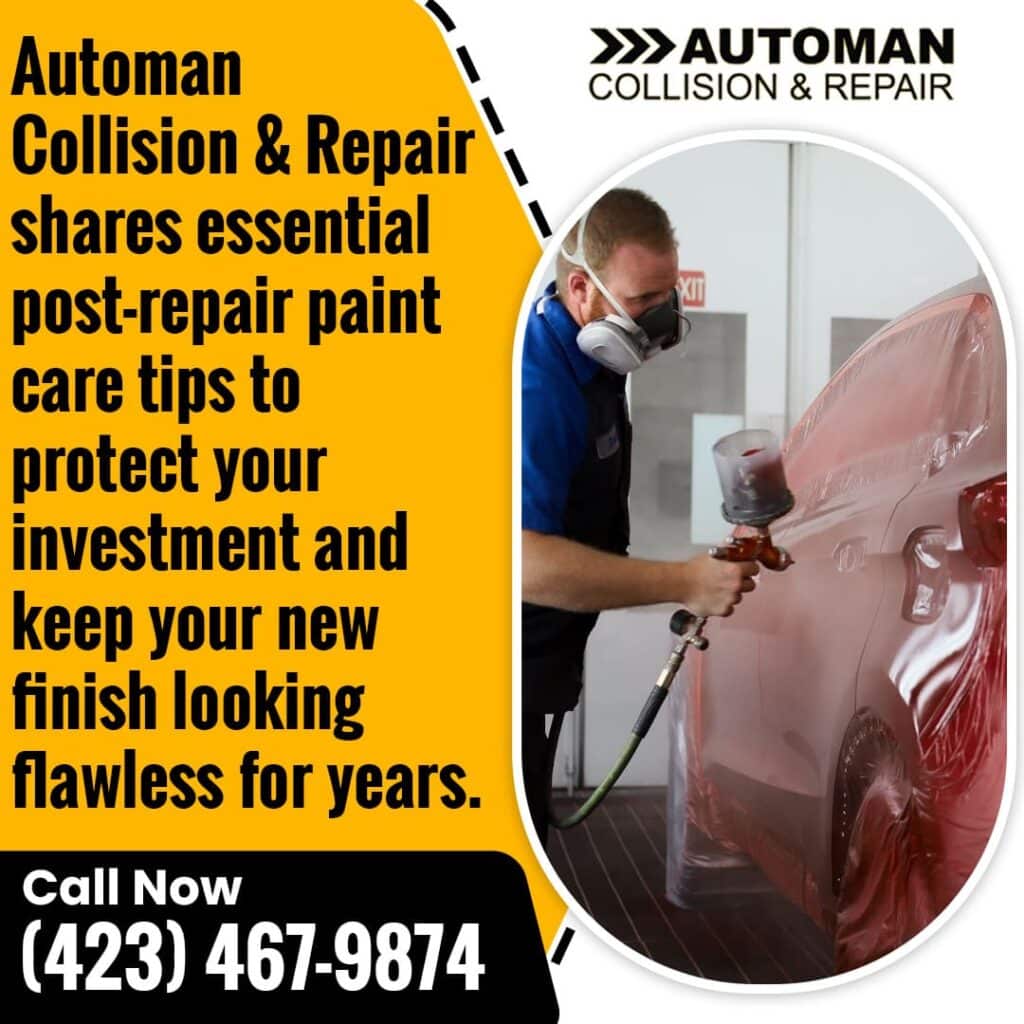
New paint is not fully hardened when it leaves the spray booth. It continues to cure for days or weeks after application.
When a Johnson City collision repair shop refinishes a panel or repaints a section of your vehicle, the paint is applied in layers. Each layer contains solvents that must fully evaporate before the paint reaches its final hardness. This process is called curing.
The paint may feel dry to the touch within hours. That does not mean it is ready for washing. The outer surface dries first. The layers underneath continue to harden and outgas for much longer.
Washing too early can cause several problems:
- Water and soap can trap solvents in the paint, dulling the finish
- Scrubbing soft paint creates tiny scratches that become visible once the paint hardens
- Harsh chemicals in some car soaps can react with uncured clear coat
- Pressure from water jets can lift paint edges on repaired panels
Waiting the right amount of time protects your investment and the work done by your collision repair near you.
How Long to Wait Before the First Wash
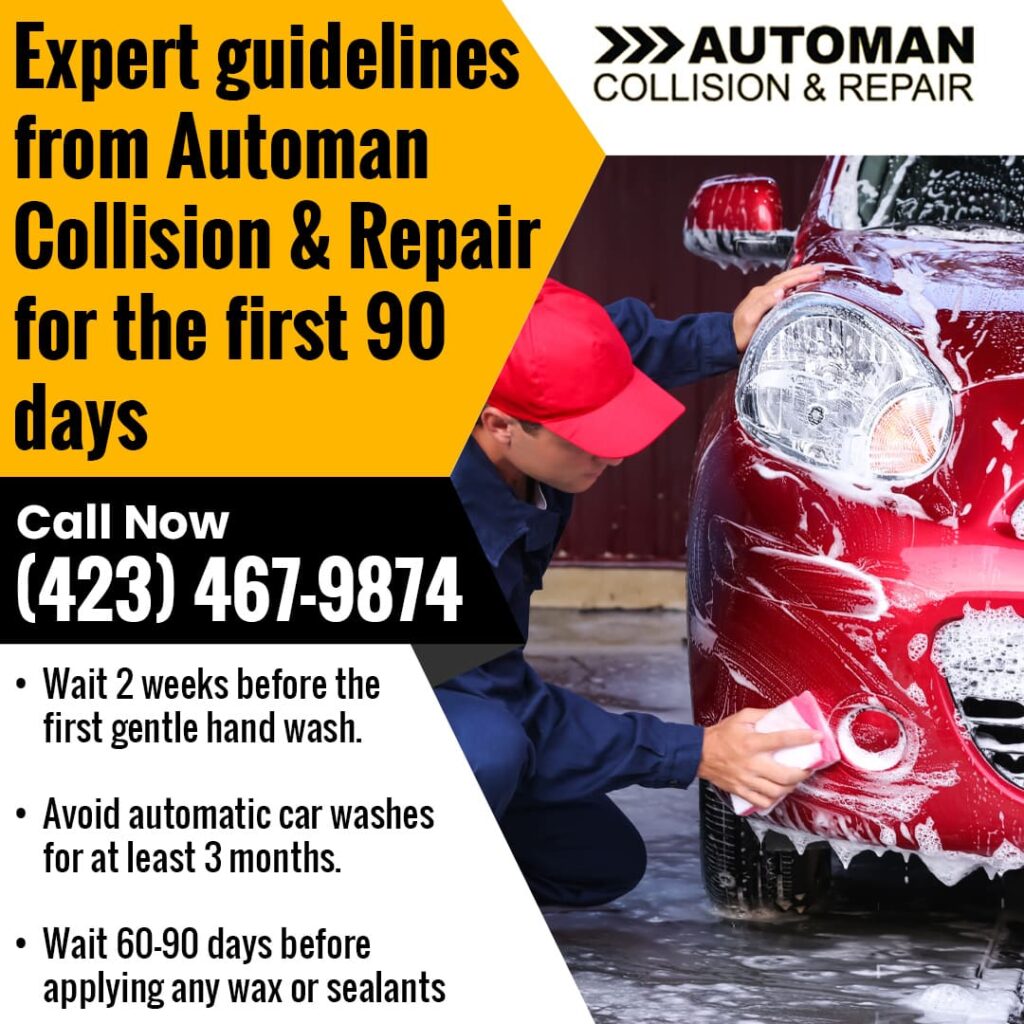
Wait at least two weeks before washing your vehicle after collision repair paintwork.
This is the standard recommendation from body shop professionals. At the two-week mark, the paint has hardened enough to handle a careful hand wash. It has not yet reached full cure, so you still need to treat it gently.
For smaller touch-up repairs, the wait can be shorter, around one week. For full panel repaints or larger repairs from a collision repair in Johnson City, TN, two weeks is the safe minimum.
After one month, you can return to a more normal washing routine. Still avoid automatic car washes for at least three months. The brushes and high-pressure spray in automatic machines can cause micro-scratches on paint that has not fully hardened.
How to Wash Your Car Safely After Repairs
Your first wash after collision repair should be by hand. Use these steps:
Step 1: Rinse the vehicle with cool or lukewarm water. Avoid hot water, which can stress fresh paint.
Step 2: Use a pH-neutral car shampoo. Avoid dish soap or any cleaner that contains wax additives or polishing agents.
Step 3: Use a clean, soft microfiber wash mitt. Never use sponges with rough surfaces or brushes.
Step 4: Wash in the shade. Direct sunlight causes water to evaporate too quickly and leaves water spots on fresh paint.
Step 5: Dry with a soft microfiber towel. Never let the vehicle air dry. Standing water leaves mineral deposits on uncured paint.
Do not dry-wipe the vehicle at any point during the curing period. Always use clean water first.
Washing vs. Waxing: What Is the Difference?
Before getting into wax timing, it helps to understand what each product does.
- Washing removes dirt, contaminants, and debris from the surface. It does not add a protective layer.
- Waxing adds a protective coating on top of the paint. It shields the surface from UV rays, environmental contaminants, and light scratches.
- Polishing uses mild abrasives to remove a thin layer of paint and smooth out imperfections. It is more aggressive than waxing and must be done carefully on fresh paint.
The concern with waxing too early is that wax can seal solvents inside the paint, preventing them from evaporating fully. This leads to a hazy, uneven finish that is hard to correct later.
How Long to Wait Before Waxing
Wait 60 to 90 days before applying any wax to freshly repainted panels.
This is the industry-standard timeframe for body shop paint using solvent-borne or two-component (2K) clear coats. Two-component clear coat, also called 2K, is a two-part product that uses a hardener mixed with the clear coat for a durable finish. It is the most common type used in professional collision repair services today.
Some shops may apply a glaze after the paint job. A glaze is a filler product that temporarily fills sanding marks and gives the paint a smooth appearance. It is not the same as wax. The glaze wears off over time and is not a substitute for proper waxing after the full curing period.
Do not apply sealants or ceramic coatings before the 60 to 90 day window either. These products require a fully cured surface to bond correctly.
Paint Care Timeline at a Glance
| Time After Repair | What You Can Do | What to Avoid |
| 0 to 2 weeks | Keep the vehicle clean and dry, and remove bird droppings gently | Washing, waxing, and automatic car washes |
| 2 to 4 weeks | Hand wash only with pH-neutral soap and microfiber mitt | Pressure washing, automatic car washes, waxing |
| 1 to 3 months | Resume normal hand washing routine | Automatic car washes, waxing, and polishing |
| 60 to 90 days | Apply wax once a full cure is reached | Abrasive compounds, machine polishing unless done by a pro |
| After 90 days | Full maintenance routine, including wax every 3 to 4 months | Harsh chemicals, abrasive car wash brushes |
What Happens If You Wax Too Early
Waxing before the paint has fully cured traps solvent gases inside the finish. Those gases need to escape as part of the curing process. When wax blocks the surface, the solvents get sealed in.
The results include:
- A hazy or milky appearance in the clear coat
- Soft spots that feel tacky or uneven
- Premature peeling or lifting at panel edges
- A finish that looks good at first but deteriorates faster
These problems are difficult to reverse without wet sanding and repolishing by a professional. Avoid them entirely by waiting the full 60 to 90 days before reaching for the wax.
How to Protect Your Paint Before You Can Wax
You do not have to leave the paint completely unprotected during the curing period. There are steps you can take that do not interfere with the curing process.
- Park in a garage or covered area. Direct sunlight causes paint to expand and contract repeatedly. This can stress fresh paint and cause micro-cracking in the clear coat.
- Avoid parking under trees. Tree sap and bird droppings land on fresh paint and cause etching quickly. Most paint damage from bird droppings occurs within 48 hours of exposure. On fresh, uncured paint, the risk is even higher because the clear coat has not yet reached full hardness.
- Remove bird droppings immediately. Do not let them sit. Dampen a clean microfiber cloth with water and gently lift the deposit. Do not rub or scrub.
- Avoid gravel roads for the first 30 days. Fresh paint chips more easily than fully cured paint. Gravel kicked up from the road can pit a new finish.
- Do not spill fuel, oil, or fluids on the painted surface. If you do, rinse immediately with water.
Common Mistakes to Avoid After Collision Repair
People who repair collision damage often make a few predictable mistakes with paint care. Here are the most common ones:
- Using a drive-through car wash too early. Automatic car washes use rotating brushes and high-pressure spray. Both can scratch uncured paint and lift panel edges. Wait at least three months before using one.
- Applying a spray wax at the gas station. Many quick-detailing sprays and spray waxes contain sealants. These can trap solvents if used too early. Read the label and check with your collision repair shop before using any product in the first 60 days.
- Letting water sit on the surface. Standing water leaves mineral deposits that etch into soft paint. Always dry the vehicle by hand after washing.
- Parking in the same spot every day under the sun’s exposure. Repeated cycles of heat and cooling cause paint to expand and contract. This stresses fresh repairs more than fully cured factory paint.
- Skipping wax entirely after the cure period. Once the 60 to 90-day window passes, wax protects the new paint from UV damage, contaminants, and road debris. Apply wax every three to four months to keep the finish looking its best.
Why Paint Maintenance Matters for Your Vehicle’s Value
A proper collision repair paint job restores your car to its original condition. Maintaining it correctly protects both the appearance and the resale value.
Nearly one in four drivers spends more than $500 each year on car washes and repairs related to bird droppings alone. That number climbs significantly when paint damage requires a professional repaint because early damage was ignored or improper products were used after a repair.
Waxing every three to four months after full cure provides a barrier between your paint and the environment. It makes contaminants easier to rinse off. It slows UV fading. It reduces the chance you will need to revisit auto body collision shops near you for paint correction work.
Questions to Ask Your Collision Repair Shop
Before you leave with your vehicle, ask your collision repair shop these questions:
- What paint system was used on my vehicle?
- How long should I wait before the first wash?
- Can I use a spray detailer in the first 30 days?
- Has a glaze been applied, and will it affect my wax timing?
- Is there anything specific about my repair I should know for paint care?
A qualified team at any reputable auto body collision shop near you should be able to answer all of these directly.
Protect Your Paint After Collision Repair in Johnson City, TN
Good paint care starts with a quality repair. At Automan Collision & Repair, LLC, our team has over 30 years of experience delivering collision repair services that meet manufacturer standards. We are I-CAR Gold Class certified, work with all insurance providers, and provide free estimates before any work begins.
When you pick up your vehicle, we walk you through exactly how to care for the new paint, so your repair lasts and your finish stays sharp.
Call us today at (423) 467-9874 or email us at [email protected] for your free estimate.
We serve Johnson City and nearby areas throughout the Tri-Cities region of Tennessee.