
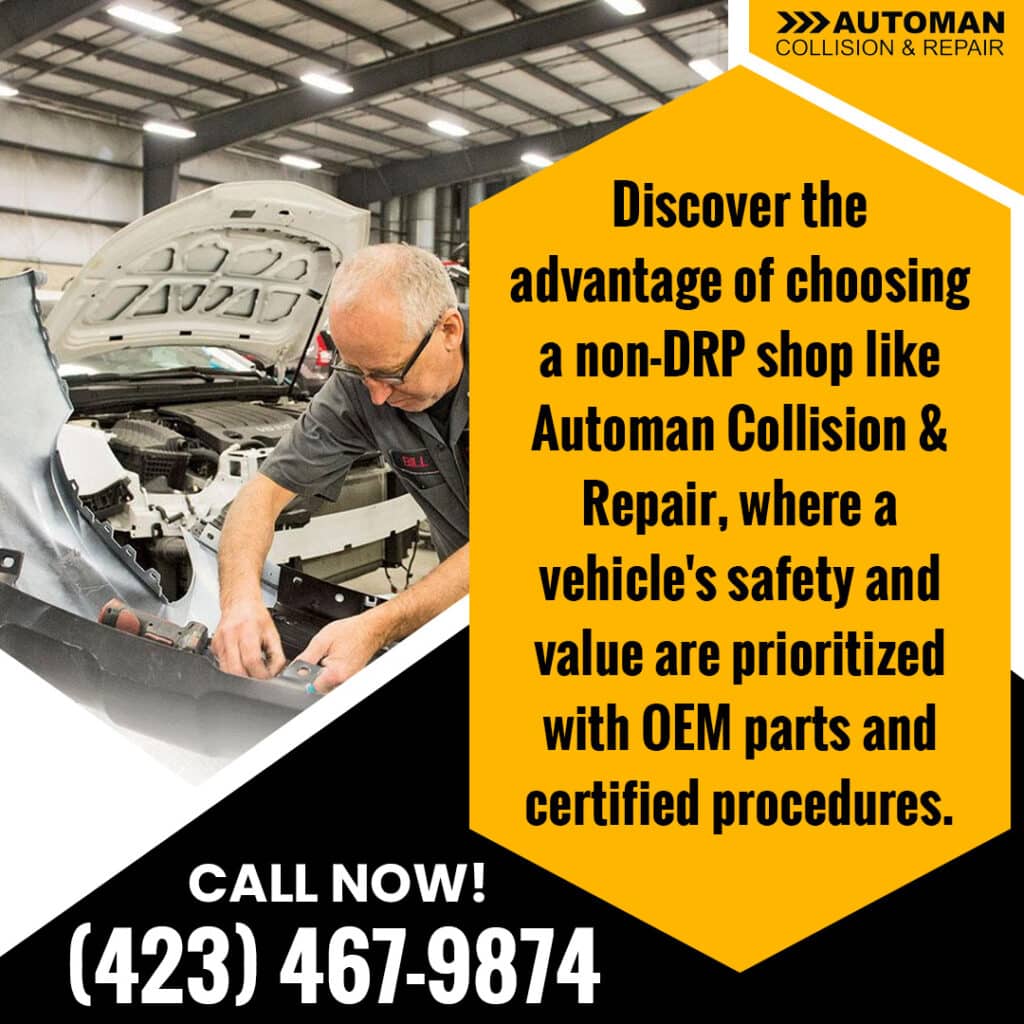
At Automan Collision & Repair LLC, we work for you, not insurance companies. As a non-DRP shop providing vehicle collision repair near you, we prioritize quality repairs using OEM parts and follow manufacturer guidelines. DRP shops accept discounted rates and follow insurer-mandated procedures that may compromise repair quality.
After a car accident, your insurance company might recommend a specific collision repair shop. These shops participate in Direct Repair Programs (DRPs). While convenient, DRP arrangements create conflicts between repair quality and insurance cost savings. We maintain independence and focus solely on restoring your vehicle properly.
Key Takeaways
- Non-DRP shops work for you, not insurance companies. We maintain independence and prioritize quality repairs over cost savings.
- DRP arrangements create conflicts between repair quality and insurance profits. Shops must balance customer needs with insurer cost demands.
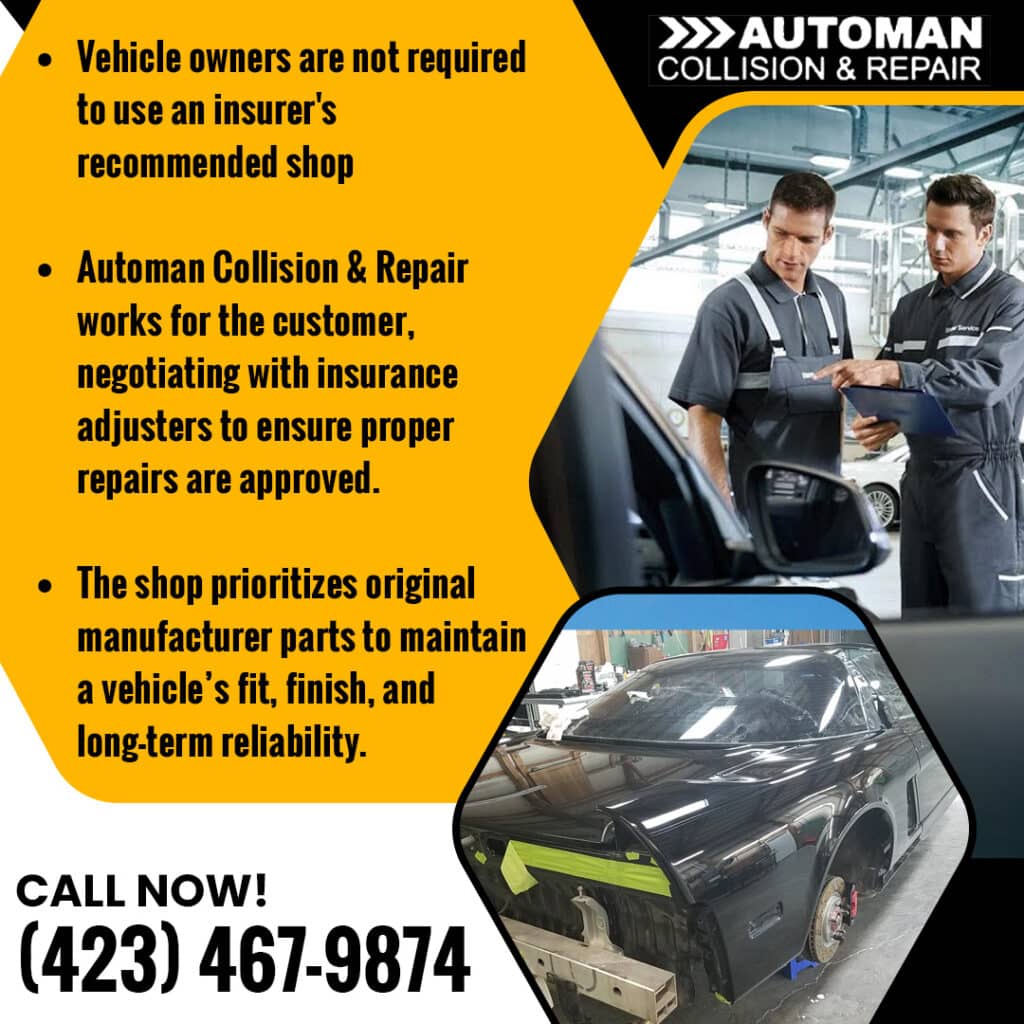
- You can legally choose any repair shop regardless of insurance recommendations. Don’t let steering tactics force you into a DRP network.
- OEM parts and proper procedures maintain vehicle value and safety. Aftermarket substitutions may save money initially, but cost more long-term.
- Independent shops offering vehicle collision repair nearby can advocate for necessary repairs without contractual restrictions. We negotiate with insurers from a customer-focused position.
What is a Direct Repair Program (DRP)?
A DRP is a contractual agreement between insurance companies and collision repair shops. The shop agrees to follow insurer pricing guidelines and use specific parts. In exchange, the insurance company directs customers to that shop.
DRP shops must meet insurance company standards for speed and cost. These standards prioritize quick turnaround times and discounted labor rates. The shop receives steady customer referrals from the insurance company.
According to the 2020 industry survey, roughly 35% of collision repair shops said they do no DRP business at all, showing a significant segment of independent shops operate outside insurer-preferred networks and retain control over repair choices.
Insurance companies try to steer most customers toward their preferred shops. This creates volume for the shop but reduces their profit per repair.
Why Do Insurance Companies Recommend DRP Shops?
Insurance companies recommend DRP shops to control repair costs and claim processing. These partnerships allow insurers to negotiate discounted labor rates and standardized repair procedures. The shops agree to use less expensive parts when possible.
DRP agreements benefit insurance companies in several ways. They reduce claim costs through negotiated discounts. They speed up the approval process with pre-agreed pricing. They standardize repairs across their network.
The relationship between DRP shops and insurers creates a potential conflict. The shop must balance customer satisfaction with insurer requirements. This pressure can lead to rushed repairs or compromised quality.
What Are the Downsides of Using a DRP Shop?
DRP shops often use aftermarket parts instead of OEM components. They must follow insurance company cost guidelines rather than manufacturer repair procedures. This creates pressure to cut corners on repair quality.
Lower Quality Parts
DRP shops frequently substitute aftermarket parts for original equipment manufacturer (OEM) parts. Aftermarket parts cost up to 50% less than OEM parts. While cheaper, these parts may not fit as precisely or last as long.
Aftermarket bumpers might have slight gaps. Aftermarket headlights may not seal properly. These small differences compound over time and affect vehicle value.
Rushed Repair Timelines
DRP shops face pressure to complete repairs quickly. Insurance companies track metrics like cycle time and push shops to work faster. This rush can lead to missed damage or incomplete repairs.
Technicians working under DRP agreements often earn less per job. They may rush through repairs to move on to better-paying work. Quality suffers when speed becomes the priority.
Limited Repair Autonomy
DRP shops must get insurance approval for many repair decisions. Want to replace a damaged part instead of repairing it? The shop needs insurer permission. This approval process delays proper repairs and limits the shop’s ability to do quality work.
The shop’s loyalty is split between the customer and the insurance company. When these interests conflict, the insurer’s cost concerns often win.
How Does Non-DRP Collision Repair Protect Your Vehicle?
We maintain full independence and prioritize proper repairs over insurance cost savings. We choose repair methods based on manufacturer guidelines and vehicle safety requirements. Your satisfaction drives our decisions, not insurance company metrics.
Focus on Quality Over Speed
We don’t face pressure to meet insurance company turnaround targets. Our technicians take the time needed to properly assess damage and complete repairs. We work for you, not for volume quotas.
At our collision repair shop in Johnson City, TN, we follow manufacturer repair procedures. We use factory-rated tools and industry-standard measuring systems. Every repair meets safety specifications.
Use of OEM Parts
We have the freedom to recommend OEM parts when appropriate. These original manufacturer parts fit precisely and match your vehicle’s original specifications. They maintain vehicle value and safety standards.
OEM parts come with manufacturer warranties. They integrate seamlessly with existing components. While more expensive upfront, they provide better long-term value through proper fit and durability.
Complete Structural Repairs
We conduct thorough frame inspections using laser measurement systems. We detect structural damage that visual inspections miss. Frame straightening follows precise manufacturer specifications rather than insurance shortcuts.
Proper collision repair services restore your vehicle’s crash safety systems. Crumple zones must function correctly. Side-impact protection requires precise alignment. We prioritize these safety factors above all else.
ADAS Calibration and Modern Technology
Modern vehicles contain Advanced Driver Assistance Systems (ADAS) like lane departure warnings and automatic emergency braking. These systems require precise calibration after collision repairs.
We invest in proper calibration equipment. We follow manufacturer procedures for camera and sensor alignment. DRP shops may skip these steps to save time and money.
Can You Choose Your Own Collision Repair Shop?
You have the legal right to choose any collision repair shop regardless of insurance recommendations. Insurance companies cannot require you to use their DRP network. This practice, called “steering,” violates consumer protection laws in many states.
Your insurance policy covers repairs at the shop of your choice. The insurer must honor your selection and pay for proper repairs. Don’t let pressure tactics force you into a DRP shop.
When selecting an auto body collision shop near you, research their certifications and independence. Look for I-CAR Gold-Class certification, which shows commitment to industry training standards. Check customer reviews and ask about their relationship with insurance companies.
DRP vs Non-DRP Collision Repair Comparison
| Feature | DRP Shop | Non-DRP Shop |
| Primary Loyalty | Insurance company | Vehicle owner |
| Parts Selection | Often aftermarket | OEM when appropriate |
| Labor Rates | Discounted for the insurer | Standard market rates |
| Repair Timeline | Rushed to meet metrics | Based on proper completion |
| Repair Autonomy | Requires insurer approval | Independent decisions |
| Quality Focus | Speed and cost | Safety and durability |
| Manufacturer Guidelines | May be compromised | Followed precisely |
Who Controls Repair Quality at Your Shop?
The party paying the shop controls repair quality priorities. At DRP shops, insurance companies provide steady referrals and influence decisions. At non-DRP shops like ours, customers pay for services and drive quality standards.
This distinction matters when hidden damage appears during repairs. A DRP shop must negotiate with the insurer for approval. We recommend necessary repairs based on vehicle needs.
We operate independently from all Direct Repair Programs. This independence allows us to focus entirely on your needs. With over 30 years of experience and I-CAR Gold-Class certification, we maintain high repair standards without compromise.
Real-World Impact of Non-DRP Repairs
Our repairs maintain vehicle resale value and long-term safety. Proper OEM parts fit correctly and last longer. Precise frame alignment prevents premature tire wear and handling problems. Complete ADAS calibration keeps safety systems functional.
Consider two identical vehicles in rear-end collisions. One goes to a DRP shop using aftermarket parts and rushed repairs. The other visits our shop following the manufacturer’s procedures with OEM components. The second vehicle maintains higher resale value and reliability.
Our collision repair process includes a thorough damage assessment. We document all issues before starting repairs. This transparency helps you understand what your car needs.
Insurance Claims with Non-DRP Shops
We handle insurance claims but maintain customer advocacy. We provide detailed estimates and documentation. Our team negotiates with adjusters from a position of experience rather than contractual obligation.
The claims process works similarly at both shop types. You file a claim with your insurance company. We provide an estimate. Repairs begin after approval. The difference lies in whose interests we protect during disputes.
We can push back when insurers deny necessary repairs. We advocate for proper procedures without fear of losing referral relationships. This advocacy protects your vehicle and your safety.
Finding the Right Collision Repair Shop
Research shops before you need repairs to make informed decisions. Look for certifications like I-CAR Gold-Class that demonstrate training commitment. Check whether the shop participates in DRPs. Read customer reviews focusing on repair quality and communication.
Visit the shop and ask about their repair philosophy. Do they prioritize speed or quality? What parts do they typically use? How do they handle insurance disputes?
A local, family-owned collision repair shop in Johnson City, TN, often provides more personalized service. We build our reputation on quality work rather than insurance referrals. We have incentives to satisfy customers who return and refer friends.
Choose Quality Vehicle Collision Repair in Johnson City, TN
Automan Collision & Repair, LLC, provides independent collision repair services focused on quality and customer satisfaction. Located at 114 Industrial Road, Johnson City, TN, we serve drivers throughout Washington, Carter, and Sullivan counties.
With over 30 years of experience, I-CAR Gold-Class certification, and Reader’s Choice Award recognition, we deliver professional repairs following manufacturer guidelines. We work with all insurance companies but remain independent from DRP networks. This independence means our loyalty stays with you, not insurers.
Call (423) 467-9874 or email [email protected] for a free estimate or to discuss your repair needs. We provide clear communication, quality craftsmanship, and hassle-free insurance assistance. When you need to repair collision damage, choose a shop that prioritizes your vehicle’s safety and your satisfaction.
Learn more about our collision repair process and what to expect when you bring your vehicle to Automan Collision & Repair.