
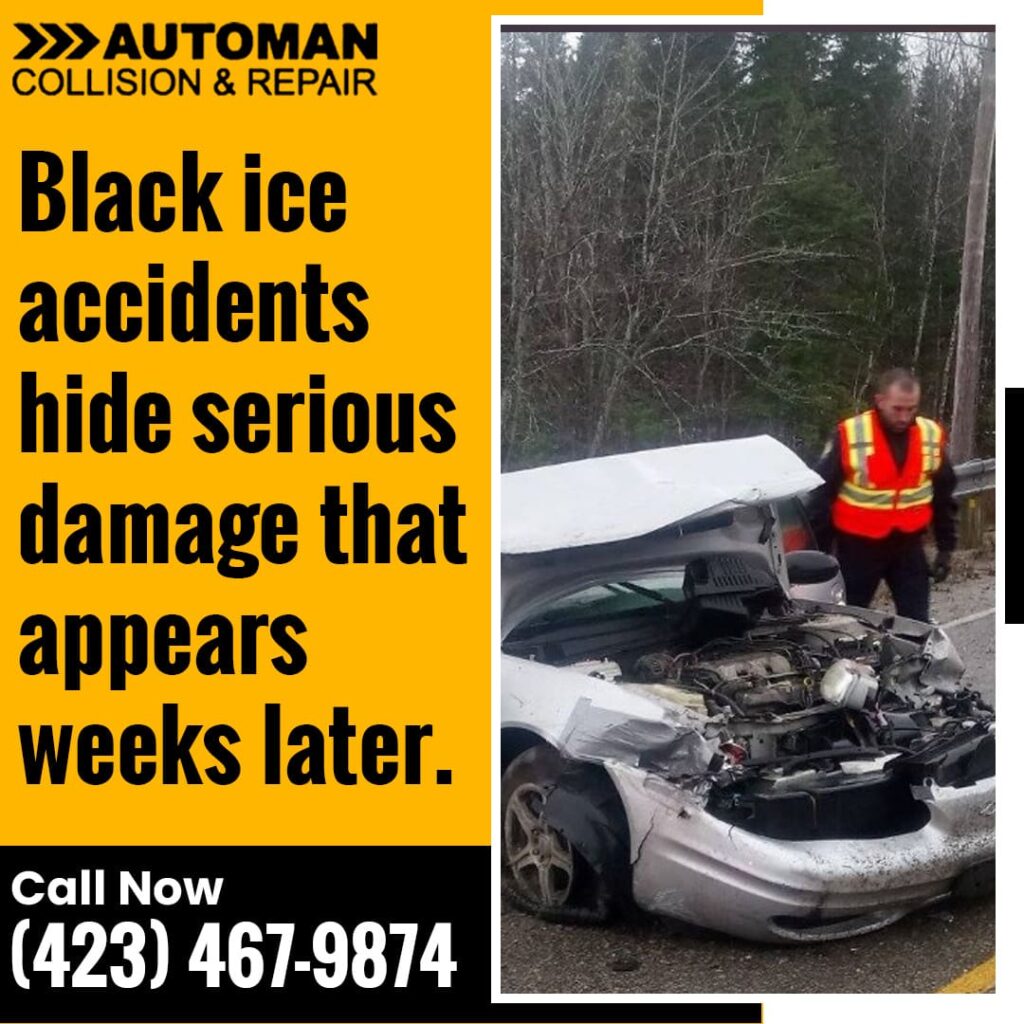
Black ice causes serious car damage that you can’t always see. Your vehicle may look fine after sliding on ice, but hidden problems develop underneath the surface. These issues often appear days or weeks after the accident. As an auto body shop in Johnson City, TN, we at Automan Collision & Repair LLC remind drivers that unseen structural or mechanical issues are common after winter road impacts.
Black ice forms when moisture freezes in a thin, transparent layer on roads. You can’t see it because it blends with the pavement. This invisible ice turns roads into slippery hazards that lead to sudden loss of vehicle control.
Key Takeaways
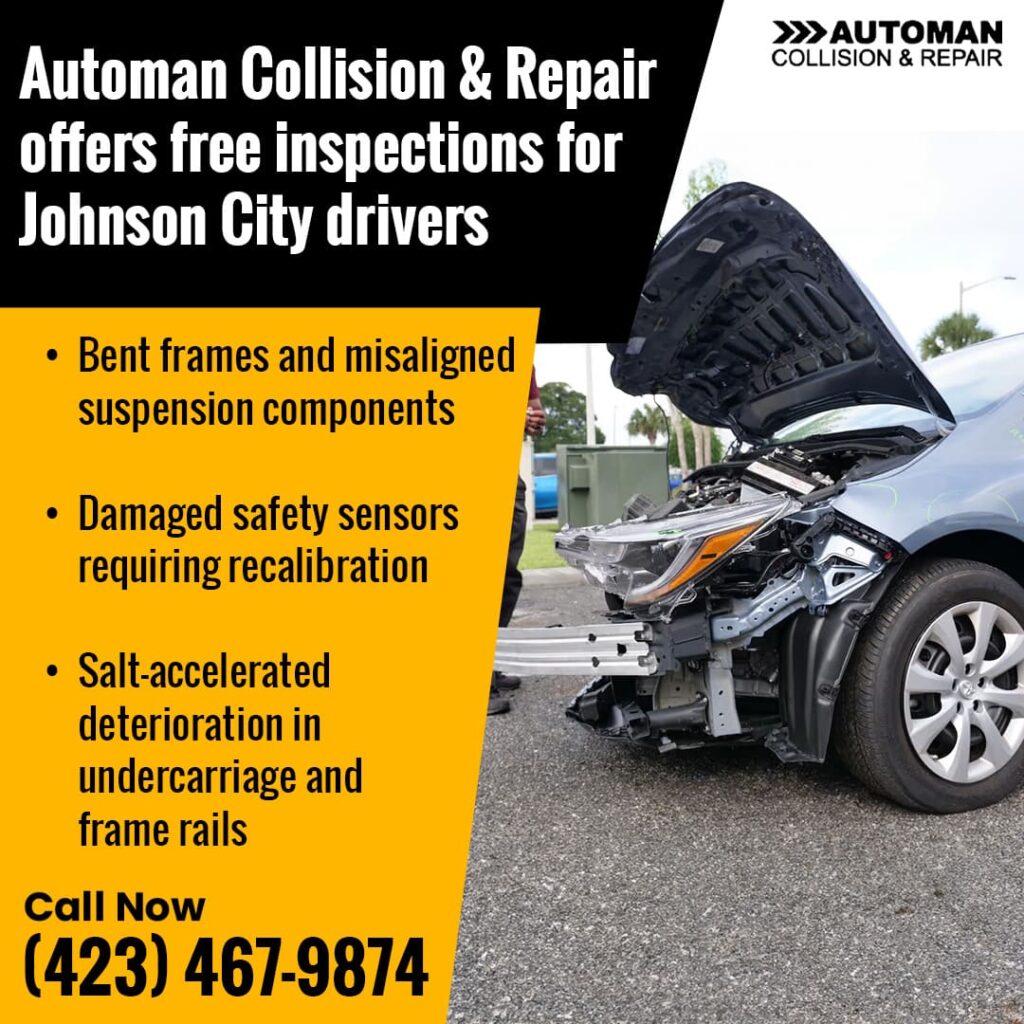
- Black ice causes 156,000 crashes yearly, often leaving hidden damage that appears weeks later. A trusted shop offering auto body repair in Johnson City, TN, helps identify issues early.
- Frame damage can bend the vehicle’s structure without visible signs, affecting alignment and safety. A reputable auto body shop in Johnson City, TN, can detect these shifts.
- Suspension problems develop gradually as damaged parts wear out faster and change handling. Drivers often discover this during visits to local auto body shops.
- Modern vehicles have 80+ sensors that can malfunction after black ice collisions due to loose wiring. Specialized diagnostics at an auto body shop in Johnson City, TN can find these faults.
- Early inspection catches hidden problems before they spread to other systems. Many residents rely on local auto body shops for fast evaluations after winter road impacts.
What Makes Black Ice So Dangerous?
Black ice leads to about 156,000 car crashes each year across the United States, according to industry sources. These crashes result in approximately 1,836 deaths and 136,309 injuries annually. The ice forms most often on bridges, overpasses, and shaded areas where sunlight can’t reach the road surface.
Drivers hit black ice without warning. The road looks wet or dry, so you don’t slow down. Then your tires lose traction instantly. Your car starts sliding before you realize what happened.
Temperature changes create black ice rapidly. Roads warm during the day and melt accumulated snow. When temperatures drop after sunset, that moisture refreezes into nearly invisible ice patches. This cycle happens frequently in Johnson City and nearby areas where elevation changes affect local temperatures.
Frame Damage You Can’t See
Your vehicle’s frame can bend or crack from black ice accidents without visible exterior damage. Modern cars use unibody construction, which means the frame integrates with the body. In some cases, even relatively low-speed impacts on ice can transfer enough force to affect a unibody structure, depending on vehicle design, angle of impact, and road conditions.
Frame damage affects how your car handles turns, braking, and overall stability while driving. You might notice your steering wheel pulls to one side. The vehicle feels unstable at higher speeds. These symptoms indicate your frame shifted out of alignment during the impact.
Computerized measuring systems can detect frame misalignment within millimeters. At our auto body shop in Johnson City, TN, we use these diagnostic tools to find hidden frame problems. Regular visual inspections miss these issues because the damage hides inside the vehicle’s structure.
A bent frame creates a ripple effect throughout your vehicle. Other components wear out faster because they no longer sit in their proper positions. Your tires develop uneven wear patterns. Suspension parts experience extra stress.
Suspension System Problems
Suspension damage from black ice accidents doesn’t always show immediate symptoms. The impact knocks components out of alignment. You won’t notice problems until your tires start wearing unevenly or your steering becomes difficult.
Your suspension system controls how your tires contact the road. It absorbs shocks and keeps your vehicle stable. When black ice causes a collision, the force travels through the suspension components. Shocks, struts, and control arms can bend or crack.
Signs of suspension damage include:
- Rough ride quality over bumps
- Difficulty steering at low speeds
- Vehicle pulling to one side
- Excessive bouncing after hitting small road imperfections
- Strange noises when turning
These problems worsen over time if you ignore them. Your car becomes harder to control. Other suspension parts fail faster because damaged components put extra stress on the entire system.
Electrical System Complications
Modern vehicles contain an average of 80 sensors and 100 electronic units. A collision on black ice can jostle wiring harnesses and loosen connections throughout your vehicle.
Electrical problems often appear days or weeks after the accident. Your backup camera stops working. Dashboard warning lights turn on randomly. The infotainment system glitches. These issues trace back to connections that came loose during impact.
Sensors behind your bumpers and inside your grille get damaged easily. Advanced driver assistance systems depend on these sensors working correctly. When these sensors are damaged or misaligned, advanced driver assistance features such as automatic emergency braking or lane departure warnings may become disabled, inaccurate, or unreliable until properly repaired and recalibrated.
Water can enter damaged electrical components through cracked housings. This creates short circuits and corrosion. The problems spread to other systems as moisture travels through wiring bundles.
Internal Bumper Damage
Your bumper might look fine on the outside while hiding serious damage inside. Modern bumpers use foam or metal structures designed to crush and absorb impact energy. Once this material gets compressed, it can’t protect you in another accident.
The plastic bumper cover shows only minor scratches after a black ice collision. Behind that cover, the energy-absorbing material may be completely destroyed. This leaves your vehicle vulnerable to greater damage in future impacts.
Cracked bumper reinforcements also allow moisture to reach sensors and wiring. Water gets trapped inside the bumper assembly. This causes electrical problems and rust over time.
Professional inspection requires removing the bumper cover. Technicians at local auto body shops can examine the internal structures. They check energy absorbers, reinforcement bars, and mounting points for damage.
Alignment Issues That Develop Over Time
Wheel alignment shifts during black ice collisions, even when you don’t see obvious damage. Your wheels point in slightly wrong directions. This creates uneven tire wear and handling problems.
Misalignment happens when impact forces move suspension components. The changes measure just millimeters, but they affect how your tires meet the road. One tire carries more weight than the others. Tread wears down faster on certain edges.
You notice alignment problems when:
- Your steering wheel sits off-center while driving straight
- The vehicle drifts to one side on level roads
- Tires squeal around corners
- Uneven wear appears across the tire treads
Driving with poor alignment damages your tires, brakes, and suspension faster. The misalignment puts constant stress on parts that should share the load evenly. You’ll replace components sooner and spend more on repairs. An experienced body shop near you will be able to give advice on the necessary steps to be taken to avoid further damage.
How Black Ice Causes Hidden Damage
| Damage Type | How It Happens | When You Notice | Why It Matters |
| Frame Misalignment | Impact forces bend unibody structure | Days to weeks later | Affects all connected systems |
| Suspension Damage | Shock travels through control arms and struts | Uneven tire wear appears | Reduces vehicle control |
| Electrical Problems | Wiring harnesses jostle loose | Random system failures | Safety features stop working |
| Internal Bumper Crush | Energy absorbers compress permanently | Next accident reveals it | Can’t protect in future impacts |
| Wheel Misalignment | Suspension geometry shifts | Steering pulls to one side | Causes premature part wear |
What Happens to Your Undercarriage
Salt and road treatment chemicals penetrate damaged paint after black ice collisions. Small scratches expose bare metal to these corrosive materials. Rust starts forming within weeks.
The undercarriage takes a direct impact when you slide into curbs on ice. This bends suspension mounting points and damages exhaust components. Frame rails develop stress fractures that spread over time.
Oil pans, transmission cases, and fuel lines run underneath your vehicle. These parts can crack or develop leaks from impact with road edges. You won’t notice small leaks right away. Fluid levels drop gradually until major problems develop.
Exhaust systems get pushed forward during rear impacts. This damages catalytic converters, muffler mounts, and connection points. You hear rattling noises or smell exhaust fumes inside the cabin.
Advanced Safety Systems Need Recalibration
Sensors throughout your vehicle need recalibration after frame or body damage. Forward collision warning cameras sit behind windshields. Radar sensors hide behind front bumpers. These systems require precise alignment to work correctly.
When your body shop near you repairs collision damage, technicians must recalibrate these sensors. Manufacturer-specific procedures guide this process. Special equipment measures sensor angles and adjusts them to factory specifications.
Skipping recalibration leaves safety systems unreliable. Warnings may be false, or real obstacles go undetected. Your vehicle’s ability to avoid future collisions gets compromised.
I-CAR Gold Class–recognized shops receive ongoing training in modern collision repair procedures, including structural repairs and ADAS recalibration processes, when performed according to manufacturer requirements. They understand how modern vehicle technology integrates with the body structure.
Why Professional Inspection Matters After Ice Accidents
Hidden damage costs more to repair when you wait. Small problems grow into major failures. What starts as a minor alignment issue becomes a suspension rebuild. Frame damage spreads stress to other components.
Professional inspection at an auto body repair shop catches problems early. Technicians lift your vehicle and examine the undercarriage. They check frame measurements against manufacturer specifications. Diagnostic equipment reads sensor data and identifies system faults.
Some insurance policies cover hidden damage discovered during repairs. Getting your vehicle inspected right after a black ice accident helps document all issues. This protects your claim if additional problems appear later.
Trust Local Experience for Winter Collision Repairs
Your vehicle deserves proper inspection and repair after any black ice incident. Auto body repair in Johnson City, TN, requires understanding how winter conditions create unique damage patterns. Our team has over 30 years of experience identifying hidden collision damage.
We use computerized measuring systems to detect frame problems that visual inspections miss. Our I-CAR Gold-Class certification means our technicians stay current with modern vehicle repair procedures. We recalibrate safety sensors to manufacturer specifications, so your advanced driver assistance systems work correctly.
Don’t let hidden damage compromise your safety or lead to expensive repairs later. Contact Automan Collision & Repair LLC at (423) 467-9874 or [email protected] for a thorough inspection. We work with all insurance companies and provide free estimates. Our modern facility at 114 Industrial Rd. in Johnson City serves the local area with Reader’s Choice Award-winning service.
Get your vehicle checked today. Small problems found now cost less than major repairs next month. Your safety depends on catching hidden damage before it fails.