
Winter driving in Tennessee’s Johnson City and nearby areas demands more than checking your engine. At Automan Collision & Repair LLC, we see how your vehicle’s body, paint, and exterior components face harsh conditions from road salt, ice, and freezing temperatures. Preparing your car’s exterior for winter prevents costly body damage, protects against corrosion, and keeps your vehicle safe on icy roads. This auto body checklist, built on what we as an auto body repair shop recommend, covers the steps you need to take before winter arrives.
Key Takeaways
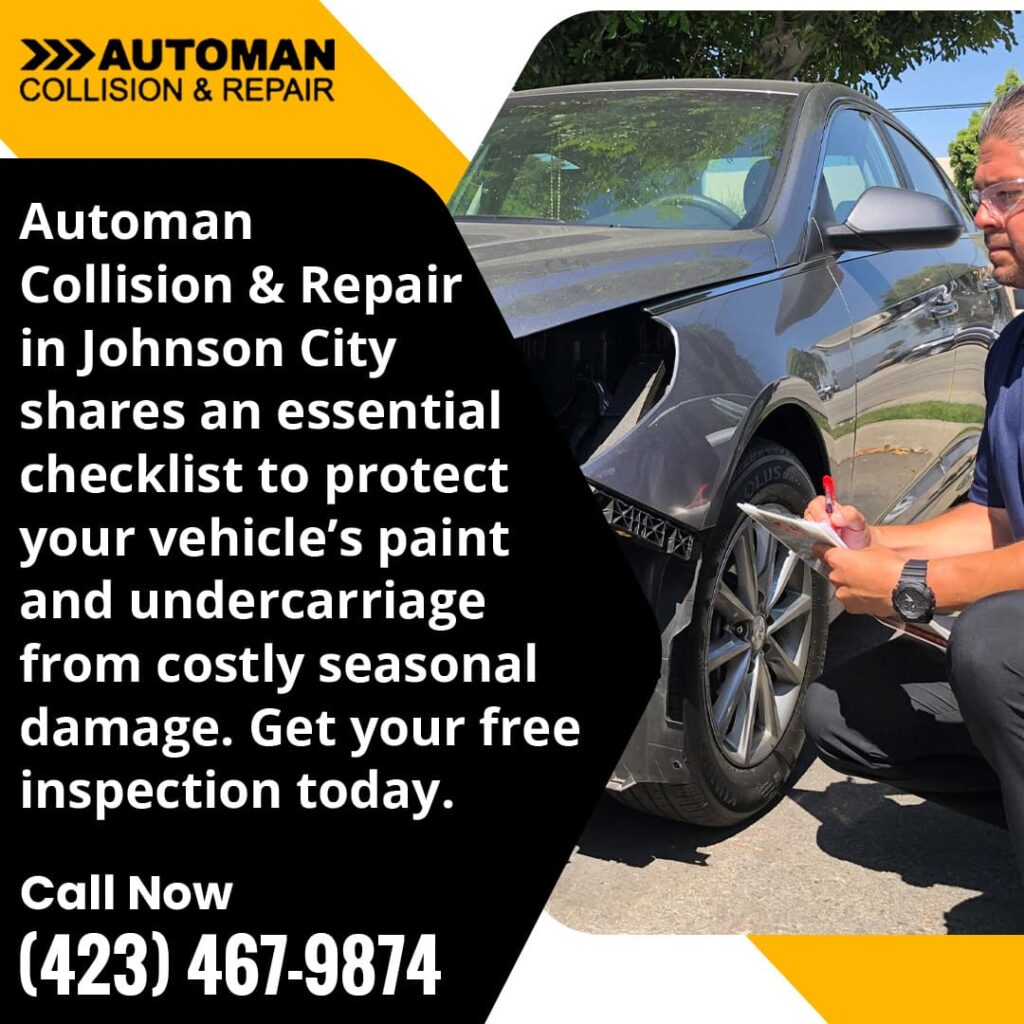
Protect paint and exposed metal before winter starts. Fix chips immediately and apply wax or protective coating to create barriers against salt and moisture. A body shop near you can handle paint chip repairs before cold weather hits.
Wash your car frequently during winter to remove corrosive salt. Regular undercarriage washing prevents rust formation on critical components and extends your vehicle’s life.
Inspect exterior seals and wipers before temperatures drop. Damaged seals let moisture inside, and worn wipers reduce visibility during snow and ice. Replace weak components early to avoid winter failures.
Schedule a pre-winter undercarriage inspection. Brake lines, fuel lines, and frame components face the harshest salt exposure. Addressing early rust or worn coatings at an auto body repair shop in Johnson City, TN, prevents costly structural repairs.
Check tire tread depth and pressure weekly during winter. Proper traction reduces skidding on icy roads, and cold temperatures cause pressure to drop, increasing accident risk.
What Should I Check on My Car Before Winter?
Check your paint for chips, scratches, or exposed metal, inspect windshield wipers and lights, examine tires for tread depth and pressure, and verify all exterior seals are intact. These checks prevent small issues from becoming major problems when winter weather hits.
Start with a walk-around inspection. Look for paint damage that exposes bare metal. Even small chips become entry points for moisture and road salt. Winter conditions accelerate rust formation on exposed metal surfaces.
Check all exterior lights. Visibility drops during winter storms, and functioning headlights, taillights, and turn signals become vital for safety. In 2023, the National Highway Traffic Safety Administration (NHTSA) reported 320 fatal crashes and approximately 22,293 injury crashes that occurred due to snow or sleet during those incidents. Working lights reduce your risk.
Inspect rubber seals around doors and windows. Cold temperatures cause rubber to become brittle and crack. Damaged seals allow moisture inside, leading to interior damage and frozen locks.
Test your windshield wipers. Replace blades showing wear or leaving streaks. Winter-grade wiper blades handle heavy snow better than standard blades. Fill your washer fluid reservoir with winter-grade fluid rated for temperatures below freezing.
How Do I Protect My Car’s Exterior from Winter Damage?
Wash and wax your car before winter starts, fix paint chips immediately, and apply protective coating to vulnerable areas. These steps create barriers against road salt and moisture.
Road salt causes extensive damage to vehicle exteriors. Salt accelerates rust formation and corrodes metal components. Cars become especially susceptible to corrosion after eight years of road salt exposure, reports the NHTSA.
Apply a high-quality wax or sealant to your paint. Wax creates a protective layer that prevents salt and moisture from bonding directly to your paint surface. This barrier makes washing more effective and protects your clear coat.
Address paint chips before winter arrives. A body shop near you can repair chips quickly and affordably. Left untreated, chips allow salt water to reach bare metal, causing damage that spreads beneath surrounding paint. Small chips become large repair jobs when ignored.
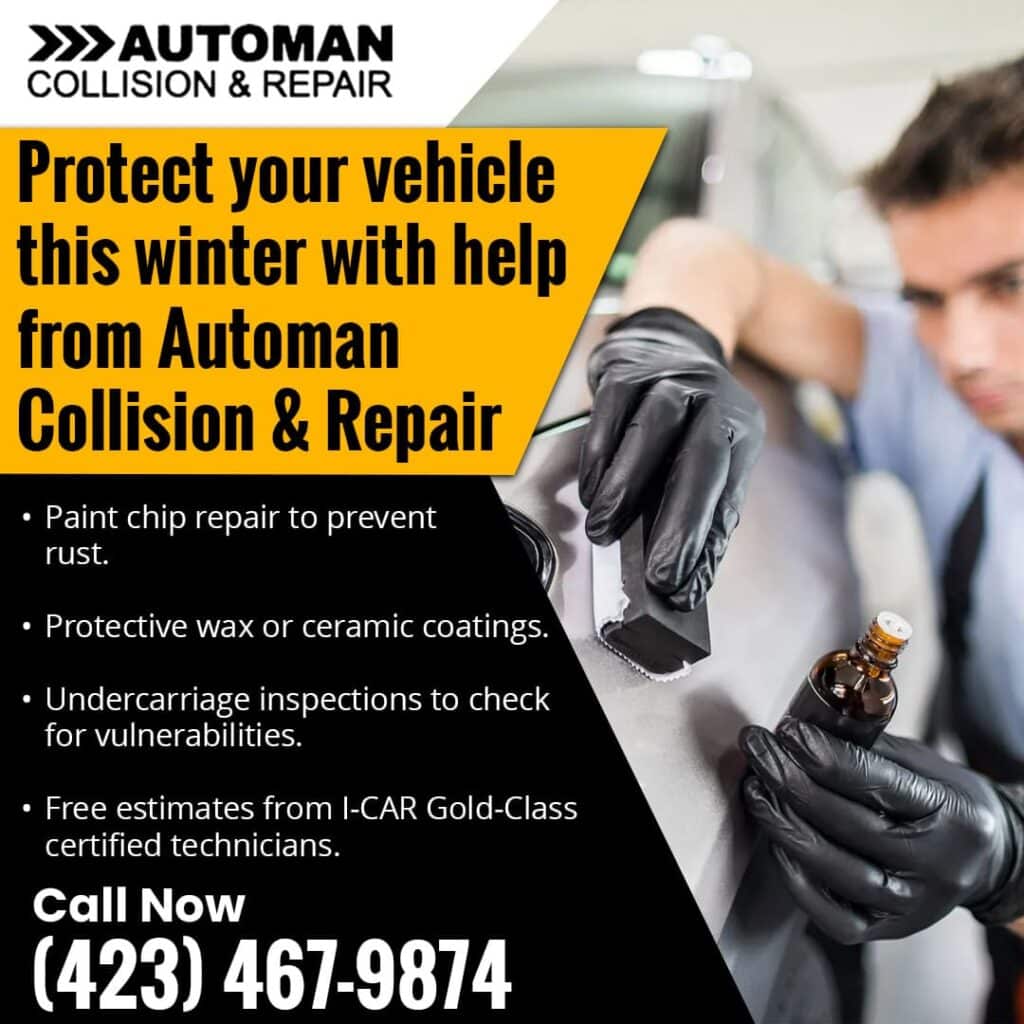
Consider professional paint protection services. Ceramic coatings provide long-lasting protection against salt, ice, and road debris. A local auto body repair shop in Johnson City, TN, can apply protective treatments designed for winter conditions.
Clean your car regularly throughout winter. Salt accumulates on paint, trim, and undercarriage components. Washing removes eroding materials before damage occurs.
Should I Get My Undercarriage Inspected Before Winter?
Yes, undercarriage inspection identifies existing damage and allows protective treatments before salt exposure begins. The undercarriage faces the most severe winter damage.
Your vehicle’s undercarriage sits closest to road salt and slush. Brake lines, fuel lines, frame components, and exhaust systems all face constant salt exposure during winter driving. Damage to these components affects vehicle safety and performance.
Visit a local auto body shop for a pre-winter undercarriage inspection. Technicians can identify damaged protective coatings or vulnerable areas needing attention. Early detection prevents small problems from becoming safety hazards.
Apply undercoating before winter. This treatment creates barriers between metal components and corrosive saltwater. Undercoating works best on clean, rust-free surfaces, making fall the ideal time for application.
Plan regular underbody washing during winter. Many car washes offer undercarriage spray options. This service removes accumulated salt from hard-to-reach areas. Wash your undercarriage at least every two weeks during active winter weather.
Park in a garage when possible. Covered parking limits exposure to precipitation and salt spray from passing vehicles. Garages also provide warmer temperatures that prevent ice buildup on your vehicle’s body.
What Fluids Need Checking Before Winter?
Check and top off antifreeze, windshield washer fluid, brake fluid, and power steering fluid before temperatures drop. Proper fluid levels prevent freeze damage and maintain vehicle function.
Antifreeze, also called coolant, prevents your engine from freezing in low temperatures. If coolant freezes and expands, it cracks the engine block, causing thousands of dollars in damage. Test your coolant mixture to verify protection at expected low temperatures. Most mechanics recommend a 50/50 mix of antifreeze and water.
Switch to winter-grade windshield washer fluid. Standard fluid freezes in cold weather, leaving you unable to clear salt spray and road grime. Winter fluid works at temperatures well below freezing and helps melt ice on your windshield.
Check brake fluid levels and condition. Moisture contamination in brake fluid lowers its freezing point and reduces braking effectiveness. Fresh brake fluid performs better in cold conditions.
Examine power steering fluid. Cold temperatures thicken fluids, making steering more difficult. Proper fluid levels help maintain responsive steering on slippery roads.
Consider an oil change using winter-weight oil. Thinner oil circulates more easily in cold temperatures, reducing engine wear during cold starts. Consult your owner’s manual for recommended oil weights.
How Often Should I Wash My Car in Winter?
Wash your car every one to two weeks during winter, or immediately after driving through salt-treated roads. Regular washing removes eroding materials before damage occurs.
Salt begins damaging metal surfaces within hours of contact. Frequent washing limits exposure time and reduces risk. Focus on the undercarriage, wheel wells, and lower body panels where salt accumulates most heavily.
Choose touchless car washes when possible. High-pressure water removes salt from crevices without scratching paint. Avoid washing when temperatures fall below freezing to prevent water from freezing on your vehicle’s surface.
Dry your car thoroughly after washing. Water remaining in door jambs, around trim, and in other crevices can freeze, causing damage. Pay special attention to door seals and lock mechanisms.
Apply fresh wax after several washes. Winter washing gradually removes protective wax coatings. Reapplication maintains your paint’s protective barrier throughout the season.
Rinse off salt promptly after winter storms. The sooner you remove salt, the less damage it causes. Even a quick rinse helps when full washing isn’t possible.
Do I Need Winter Tires in Tennessee?
Winter tires provide better traction in cold conditions, but all-season tires work for most Tennessee winters if properly maintained. Your decision depends on your driving conditions and routes.
Tennessee winters typically bring ice, freezing rain, and occasional snow rather than consistent heavy snowfall. All-season tires handle these conditions when properly inflated and showing adequate tread depth.
Check tire tread depth using the penny test. Insert a penny into the tread with Lincoln’s head upside down. If you see the top of his head, replace your tires. Minimum safe tread depth is 4/32 inches for winter driving.
Monitor tire pressure weekly during winter. Cold air causes tire pressure to drop. Underinflated tires reduce traction and increase accident risk. Check pressure when tires are cold, before driving.
Winter tires become worthwhile if you drive mountain roads or travel to higher elevations regularly. Winter tires use softer rubber compounds that remain flexible in freezing temperatures, providing better grip on ice and snow.
Rotate tires before winter to distribute wear evenly. Uneven wear reduces traction and handling. Regular rotation extends tire life and improves winter performance.
Consider your vehicle’s age and condition. Older vehicles benefit more from winter tire traction improvements. Newer vehicles with advanced traction control systems perform well with quality all-season tires.
What Should Be in My Winter Emergency Kit?
Pack blankets, flashlight, first aid kit, jumper cables, ice scraper, phone charger, water, non-perishable food, and traction aids like sand or kitty litter. Emergency supplies help if you become stranded.
Winter emergencies happen without warning. Mechanical failures, accidents, or sudden weather changes can leave you stuck. Proper supplies keep you safe and comfortable until help arrives.
Store several warm blankets in your vehicle. Body heat drops quickly in a disabled car. Blankets provide warmth without running your engine, preventing carbon monoxide risks.
Keep a heavy-duty ice scraper and snow brush accessible. Clearing snow and ice from windows and lights takes time, but improves safety dramatically. Remove all snow from your roof to prevent dangerous snow slides while driving.
Pack a flashlight with extra batteries. Winter darkness arrives early. Good lighting helps you inspect damage, signal for help, and perform minor repairs.
Include jumper cables or a portable jump starter. Cold weather drains battery power. Dead batteries are the leading cause of winter breakdowns. A jump starter provides independence without needing another vehicle.
Add traction aids like sand, kitty litter, or traction mats. Pour these materials under the drive wheels when stuck on ice. They create a grip that helps you escape snow or ice.
Keep water and high-energy snacks like protein bars or trail mix. If stranded for hours, proper nutrition maintains your energy and mental clarity.
Store a basic tool kit and duct tape. Simple repairs or temporary fixes can get you moving again or prevent additional damage while waiting for help.
When Should I Get Paint Chips Fixed Before Winter?
Fix paint chips as soon as you notice them, ideally before winter begins. Immediate repair prevents rust and limits damage spread.
Small paint chips expose bare metal to moisture and oxygen. This combination starts to damage the surface within days. Winter accelerates the process through freeze-thaw cycles and road salt exposure.
An experienced auto body repair shop in Johnson City, TN, such as Automan Collision & Repair LLC, can repair minor chips quickly. Professional repairs match your paint color exactly and seal the damaged area properly. This service costs far less than repairing extensive rust damage later.
DIY touch-up paint provides temporary protection if professional repair must wait. Clean the chip thoroughly, apply primer to bare metal, then add matching paint. This approach stops damage temporarily but lacks the durability of professional repair.
Inspect your vehicle monthly for new chips. Rocks, debris, and ice cause frequent paint damage during winter. Early detection allows prompt repair before the problem spreads.
Consider full panel repainting for vehicles with multiple chips in one area. Extensive chip damage makes individual repairs impractical. A body shop near you can assess whether spot repairs or panel painting makes more sense.
Summary: Winter Auto Body Maintenance Priority Table
| Task | Timing | Importance | Estimated Cost |
| Fix paint chips and scratches | Before winter | High | $50–$300 |
| Apply wax or protective coating | Before winter | High | $100–$500 |
| Inspect undercarriage | Before winter | High | Free–$100 |
| Check all lights | Before winter | High | $10–$50 per bulb |
| Replace wiper blades | Before winter | Medium | $20–$40 |
| Wash car with undercarriage spray | Every 1–2 weeks | High | $15–$30 per wash |
| Check tire pressure | Weekly | High | Free |
| Reapply wax after washing | Every 4–6 weeks | Medium | $100–$300 |
| Inspect for new damage | Monthly | Medium | Free |
| Professional detailing | After winter | Medium | $150–$400 |
Auto Body Repair Shop: Professional Winter Damage Prevention
Automan Collision & Repair provides complete winter preparation services as a trusted auto body shop in Johnson City, TN. Our I-CAR Gold-Class certified technicians inspect your vehicle’s exterior, repair existing damage, and apply protective treatments designed for Tennessee winters.
We fix paint chips, apply protective coatings, inspect undercarriages, and repair weather-related auto body damage. Our team has over 30 years of experience protecting vehicles from winter conditions.
Winter preparation protects your investment and prevents expensive repairs later. Small preventive measures cost less than major collision repair work after winter damage occurs. Local auto body shops can help you stay ahead of winter damage with timely inspections and maintenance.
Get Your Vehicle Winter-Ready Today
Don’t wait until winter damage occurs. Schedule a pre-winter inspection at Automan Collision & Repair LLC in Johnson City, TN. Call (423) 467-9874 or email [email protected] for a free estimate.
Our family-owned shop serves Johnson City and nearby areas with honest, quality auto body repair. We work with all insurance companies and offer stress-free service. Visit us at 114 Industrial Road or contact us online to prepare your vehicle for winter roads.